Table of Contents
2. Choosing the right EV charging connector
(1.) Choose according to the type of electric vehicle?
(2.) How to consider the compatibility of charging power and connector?
(3.) How to match the connector interface standard?
(4.) How to evaluate the material and durability?
3. How to use the EV charging connector correctly
(1.) What checks should be done before charging?
(2.) How to standardize the connection and disconnection operations?
(3.) What should be paid attention to during the charging process?
4. How to deal with common problems of EV charging connectors
(1.) What should I do if the connector is damaged?
(2.) What are the reasons for charging interruption and how to deal with it?
(3.) How to solve poor contact?
5. How do you view the future development of EV charging connectors?
(1.) What are the directions of technological innovation?
(2.) What impact will it have on users?
As electric vehicles (EVs) become increasingly popular, the correct selection and use of EV charging connectors, as key components in the charging process, directly affects charging efficiency, vehicle safety, and user experience. This article will use a question-and-answer format to explore how to scientifically and reasonably select and use EV charging connectors in actual scenarios, and interpret common problems and future developments.
2. Choosing the right EV charging connector

(1.) Choose according to the type of electric vehicle?
Different types of electric vehicles have different charging requirements and interface designs. The range of pure electric vehicles (BEV) depends on charging, and the compatibility and charging speed of the charging connector are relatively high; although plug-in hybrid electric vehicles (PHEV) have fuel replenishment, they also need efficient charging. For example, some Tesla models use a dedicated charging interface, and the connector must match its standard when selecting it; while most domestic electric vehicles follow the national standard charging interface, which is more universal. Therefore, when buying a car, you should understand the vehicle charging interface standard and choose a connector that is compatible with it.
(2.) How to consider the compatibility of charging power and connector?
Charging power determines charging speed. Common charging powers include 3.3kW, 7kW, 11kW, 22kW AC charging, and higher power DC fast charging. The connector must be able to withstand the corresponding power. For example, for 7kW AC charging, you need to choose a connector that can carry at least 32A current; DC fast charging power can reach 100kW or even higher, and the connector must be adapted to large current transmission. If the rated current of the connector is lower than the charging power requirement, it is easy to heat up and even cause safety accidents. Therefore, according to the maximum charging power supported by the vehicle, choose a connector with a matching rated current.
(3.) How to match the connector interface standard?
There are many charging interface standards in the world, such as the national standard (GB/T), European standard (Type 2), American standard (SAE J1772), Tesla Supercharger interface, etc. In China, the national standard interface is the mainstream, and most public charging piles and electric vehicles use this standard. If the vehicle is an imported model or a specific brand has a dedicated interface, you need to pay extra attention. For example, some imported BMW models may use European standard interfaces, which require conversion connectors or compatible charging piles for domestic use. When selecting a connector, be sure to ensure that the interface standard is consistent with the vehicle and charging pile.
(4.) How to evaluate material and durability?
The material of the connector affects its durability and safety. High-quality connector shells are mostly made of high-strength, flame-retardant, and weather-resistant engineering plastics, such as PC (polycarbonate) and PA (nylon), which can maintain stable performance in different environments. The internal conductor is generally made of high-purity copper to reduce resistance and heat generation. At the same time, check the protection level of the connector, such as IP54, which means dustproof and splashproof, suitable for outdoor environments. When purchasing, you can refer to the product manual, user reviews and brand reputation to choose a connector with excellent material and high durability.
Basic Introduction:
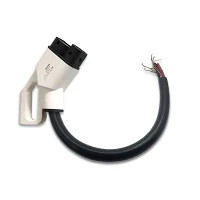
| EV connector | CCS1 |
| Rated current | 60A-250A |
| Rated voltage | 1000VDC |
| Insulation resistance | >500MΩ |
| Contact impedance | 0.5 mΩ Max) |
| Withstand voltage | 3500V |
| Fireproof grade of rubber shell | UL94V-0 |
| Mechanical life | >10000 unloaded plugged |
| Plastic shell | thermoplastic plastic |
| Casing Protection Rating | NEMA 3R |
| Working environment temperature | -30℃- +50℃ |
| Terminal temperature rise | <50K |
| Insertion and Extraction Force | <100N |
| Warranty | 2 years |
3. How to use the EV charging connector correctly
(1.) What inspections should be done before charging?
Before charging, first check whether the connector is damaged or deformed, and whether the pins are bent or dirty. If the outer shell is found to be cracked, the internal circuit may be exposed, causing the risk of electric shock; dirty pins will affect the contact effect and cause abnormal charging. At the same time, check whether there are foreign objects or water stains on the charging pile interface. If there are foreign objects, they need to be cleaned before charging. In addition, confirm whether the charging cable is damaged or broken. If so, it should be replaced in time to prevent short circuit accidents.
(2.) How to standardize the connection and disconnection operations?
When connecting, first align the connector plug with the vehicle charging port and insert it smoothly to ensure that the plug is fully inserted and a "click" locking sound is heard. Do not plug and unplug violently to avoid damaging the interface and connector. When disconnecting, first stop charging on the charging pile or vehicle control interface. After the charging current returns to zero, press the unlock button on the connector and then gently pull out the plug. During charging, avoid pulling the charging cable to prevent the connector from loosening and poor contact.
(3.) What should I pay attention to during charging?
During charging, pay attention to the charging status information on the vehicle dashboard or the charging pile display, such as charging current, voltage, remaining time, etc. If you find abnormal charging parameters, such as sudden and large fluctuations in current, it may be due to poor contact of the connector or a fault in the charging pile. You should stop charging immediately for inspection. At the same time, pay attention to the charging environment and avoid charging in high temperature, humidity, flammable and explosive environments. If charging outdoors, in bad weather, such as heavy rain or lightning, you should suspend charging to ensure safety.
4. How to deal with common problems of EV charging connectors
(1.) What to do if the connector is damaged?
If the connector shell is damaged, stop using it and replace it with a new one to prevent further damage to the internal circuit. If the pin is bent, try to carefully reset it with tweezers or other tools, but be careful not to break the pin. If the pin is severely damaged or cannot be repaired, the entire connector plug needs to be replaced. In any case, non-professionals should not disassemble and repair the internal circuit by themselves. They should contact professional after-sales personnel or replace it with a new qualified product.
(2.) What is the reason for charging interruption and how to deal with it?
Charging interruption may be caused by a variety of reasons. If the connector is loose, check and re-insert it to ensure that the connection is firm. If the charging pile is faulty, try to replace the charging pile. If the vehicle battery management system detects an abnormality, such as excessive battery temperature, overcharge protection, etc., you need to wait for the vehicle system to return to normal or contact after-sales personnel for troubleshooting. In addition, grid voltage fluctuations may also cause charging interruption. You can wait for a while and recharge after the voltage stabilizes.
(3.) How to solve poor contact?
Poor contact usually manifests as intermittent charging and unstable charging power. First, check whether the connector pins and vehicle interfaces are dirty. If so, wipe them gently with a clean soft cloth. If the problem still exists, it may be that the spring sheet inside the connector is not elastic enough and cannot tightly contact the pins. In this case, it is necessary to replace the relevant parts inside the connector or the entire connector. In daily use, keep the connector and interface clean and dry to reduce the occurrence of poor contact problems.
5. How do you view the future development of EV charging connectors?
(1.) What are the directions of technological innovation?
In the future, EV Charging Cables will develop in the direction of higher power, more intelligent, and wireless. Higher power charging can significantly shorten the charging time. For example, the development of connectors that can support 350kW or even higher power can meet the user's needs for rapid energy replenishment. In terms of intelligence, the connector will integrate more sensors to monitor the charging status, temperature, current and other parameters in real time, and realize intelligent diagnosis and fault warning. Wireless charging technology is also constantly improving. In the future, wireless charging connectors are expected to achieve higher efficiency and greater power transmission, improving charging convenience.
(2.) What impact will it have on users?
Higher power charging connectors allow users to significantly shorten the waiting time for charging and improve travel efficiency. Intelligent connectors make it easier for users to grasp the charging status in real time and plan their trips in advance, and the fault warning function can ensure charging safety. If wireless charging connectors are popularized, users do not need to plug and unplug the connectors, and can charge when parking, which will further improve the user experience and make electric vehicles more convenient, efficient and safe to use.
Correctly selecting and using EV Charging Plug not only ensures the safety and efficiency of electric vehicle charging, but also affects the healthy development of the entire electric vehicle industry. With the continuous innovation of technology, EV charging connectors will bring users a better charging experience in the future. Users should keep abreast of relevant knowledge, reasonably deal with problems in use, and jointly promote the electric vehicle industry to new heights.