

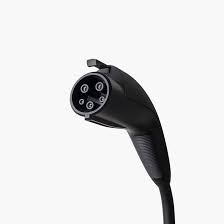
Sae J1772 Connector
The Sae J1772 Connector Manufacturer!
APEKS is a forward-looking enterprise that is actively involved in the research, development, manufacturing, and sales of electric vehicle charging products, specifically electric vehicle connectors, portable electric vehicle chargers, and electric vehicle cables. They have achieved notable certifications for their products, including ISO9001:2015 and IATF16949:2016 quality management system certifications, as well as essential testing and certification marks such as TUV, CE, UKCA, UL, and CQC.


Why Choose Us
Professional team
The company boasts a dedicated R&D team of over 100 professionals with over a decade of experience in electronic power supplies. Their expertise spans various domains, including materials, structures, electronics, appliances, software, hardware, and technology.
Technology Certification
APEKS have achieved notable certifications for their products, including ISO9001:2015 and IATF16949:2016 quality management system certifications, as well as essential testing and certification marks such as TUV, CE, UKCA, UL, and CQC.
Production Equipment
APEKS have a well-equipped manufacturing facility with over 200 large-scale production machines, coupled with well-established production, quality inspection, and transportation processes.
Global Sales
APEKS caters to an impressive list of customers, including well-known brands such as BYD, NIO, VESTEL, and VORWERK. Their global presence is evident, with products exported to more than 60 countries.
|
EV Connector Type |
Type 1 (SAE J1772) |
|
Output Current Type |
AC (Alternate Current) |
|
Supply Input |
120 Volts or 208/240 Volts (Single-phase only) |
|
Maximum Output Current |
16 Amps (120 Volts) 80 Amps (208/240 Volts) |
|
Maximum Output Power |
1.92 kW (120 Volts) 19.2 kW (208/240 Volts) |
|
EV Charging Level(s) |
Level 1, Level 2 |
|
Primary Countries |
USA, Canada |
The benefits of ev chargers
Provide convenience and flexibility
EV Chargers provide convenient charging solutions, so that car owners do not need to frequently look for gas stations, and a wider distribution network of charging piles increases the flexibility of charging options
Reduce environmental pollution
EVs replace traditional fuel vehicles and reduce exhaust emissions. EV charger uses renewable energy for charging, reducing the carbon footprint

Lower energy costs
Smart electric vehicle charging piles can manage to charge plans to take advantage of low-peak electricity prices and can use charging pile monitoring functions to understand charging consumption and costs in real-time
Promote sustainable development
The installation and development of electric vehicle charging piles support the construction of a sustainable transportation system, and the expansion of the distribution network of EV chargers can provide infrastructure for the popularization and development of electric vehicles in the future
Types of Universal Charging Connectors
Type 1 (J1772):
Common in North America, this is the standard connector for many EVs, including those from brands like Chevrolet and Nissan. It supports Level 1 and Level 2 charging.
Type 2 (Mennekes):
Popular in Europe, this connector is used by many EVs, such as BMW and Volkswagen. It allows both regular and fast charging, making it versatile for different EV models.
CCS (Combined Charging System):
Used in both North America and Europe, CCS is the go-to connector for fast charging. It combines the Type 1 or Type 2 connector with additional pins to support higher charging speeds, making it ideal for quick top-ups.
CHAdeMO:
Another fast-charging connector, mostly found in Japanese EVs like Nissan Leaf and Mitsubishi. While less common in North America, it's still a widely used option in other parts of the world.
Connector Security Features
As the EV charges, a power surge can happen and cause damage. That is why many EV charging connectors offer security features. A typical connector comes with built-in security features, including:
Automatic locking systems are used to prevent disconnection when the car is charging.
The built-in locking mechanisms ensure safe charging connections. These are common in type 2 and GB/T EV charging connector types.
Charging stations for pay use encryption and authentication protocols that help keep the charging process safe.
Now we have tamper-proof designs that prevent unauthorized access. Liquid-cooled cables enable high-power chargers like CHAdeMO and CCS to operate safely.
Factors to Consider When Choosing a Charging Connector
Vehicle Compatibility:
Ensure charging connector compatibility with your specific EV model. For example, Verify the recommended connector type from your vehicle manufacturer.
Charging Speed and Power Levels:
Take into account the charging speed and kW supported by the charging connector. For example, the CCS EV charging connector facilitates Level 3 fast charging, enabling swift charging sessions.
Connector Availability and Charging Infrastructure:
Assess the accessibility of charging connectors in your region and the prevailing charging infrastructure. In Europe, Type 2 connectors are widely employed, while in North America, Type 1 connectors are more prevalent.
Future Compatibility and Standards:
Ensure the EV charging connector's future compatibility as EV technology evolves. Consider a CCS connector with AC/DC charging capabilities for long-term compatibility with advancing standards.
Safety and Certification:
Prioritize safety with certified charging connectors meeting international standards such as UL, CE, and TÜV.
Durability and Reliability:
Choose a durable EV charging connector (IP54 or IP67) for frequent use and various weather conditions, reducing malfunctions and ensuring longevity.
User Convenience and Design:
Assess user-friendly features like easy plug-in mechanisms, secure locking systems, and ergonomic designs for convenient charging experiences.
FAQ
As one of the best sae j1772 connector manufacturers and suppliers in China, we warmly welcome you to wholesale cheap sae j1772 connector from our factory. All our products are with high quality and competitive price.
iec 62196 type 1, sae j1772 type 1, sae j1772 type 2