

Type 2 Tethered Cable
The Type 2 Tethered Cable Manufacturer!
APEKS is a forward-looking enterprise that is actively involved in the research, development, manufacturing, and sales of electric vehicle charging products, specifically electric vehicle connectors, portable electric vehicle chargers, and electric vehicle cables. They have achieved notable certifications for their products, including ISO9001:2015 and IATF16949:2016 quality management system certifications, as well as essential testing and certification marks such as TUV, CE, UKCA, UL, and CQC.


Why Choose Us
Professional team
The company boasts a dedicated R&D team of over 100 professionals with over a decade of experience in electronic power supplies. Their expertise spans various domains, including materials, structures, electronics, appliances, software, hardware, and technology.
Technology Certification
APEKS have achieved notable certifications for their products, including ISO9001:2015 and IATF16949:2016 quality management system certifications, as well as essential testing and certification marks such as TUV, CE, UKCA, UL, and CQC.
Production Equipment
APEKS have a well-equipped manufacturing facility with over 200 large-scale production machines, coupled with well-established production, quality inspection, and transportation processes.
Global Sales
APEKS caters to an impressive list of customers, including well-known brands such as BYD, NIO, VESTEL, and VORWERK. Their global presence is evident, with products exported to more than 60 countries.
The most common sizes of electric car charging cables
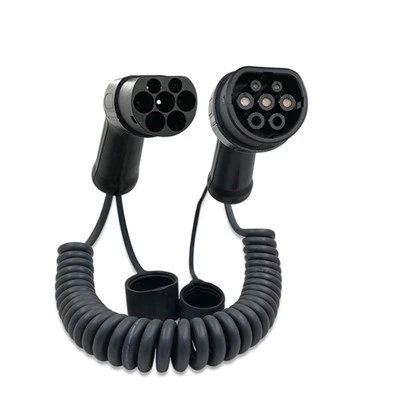
5 meters:
This is the standard length, most widely used in the market. It represents a good compromise between versatility and maneuverability, being suitable for most residential installations and public columns.
7 meters:
Recommended when the location of the outlet on the vehicle is far from the charging point, or when charging often in public spaces where physical layout control may be lacking. The extra length can make a real difference in awkward situations.
3 meters:
Suitable only for extremely controlled environments, such as private garages where the wallbox is installed close to the car socket. It is unsuitable for dynamic or outdoor settings
To Use A Charging Cable: Step-By-Step Instructions
Prepare Your EV And Charging Station:
Make sure you park the car in a place where both the EV and charging station can be easily accessed. For hybrid models, switch off the engine.
Check The Connector Type:
Ensure that the charger cable and connector type (Type 1, Type 2, CCS or CHAdeMO) are compatible with your vehicle's inlet as well as that of the charging station.
A Type 2 connector supports AC charging of up to 43 kW, while CHAdeMO usually supports DC fast charging at around 50 kW.
Connect The Charging Cable:
Take off any covers on connectors or sockets if there are any.
Insert securely into the vehicle's charging inlet. At a public charging station, follow prompts such as swiping an access card or using a mobile app to start the charge session.
Monitor Charging Parameters:
Confirm that charging has commenced by looking at the display of your chosen charging station.
Voltage, current and charge rate should be watched. For example: 230V at 16A (standard residential AC charger) or 400V at 125A (DC fast charger).
Wait For Charging To Complete:
Charging time depends on charger power level and battery capacity of your electric car; different models may have different figures here as well but it's safe to say most people will be within these ranges!
If you're using a home charger rated for about 7.4 kW with a battery pack size around 60 kWh then expect full charge within eight to ten hours; if however one opts for faster DC option like those found on highways which are typically between fifty thousand watts per hour (kWh) capable of juicing up same said batts up till eighty percent state fettle then waiting times will only amount sixty minutes give or take some seconds either side – this assumes everything works perfectly else add more!
Disconnect The Charging Cable:
Stop charging through either the EV's interface or the charging station once it's done.
Remove it from both vehicle inlet and charging station. Put back any protective covers on the connector and inlet.
Store The Charging Cable Correctly:
Neatly coil cable to prevent damage while in storage always ensure you keep them somewhere clean and dry where they won't be exposed too much to direct sunlight or extreme temperature fluctuations this could affect their performance over time even if used intermittently so take care!
Types of EV Charging Cables
Type 1 cables:
These cables are often used with older EV models, primarily from manufacturers in the United States and Japan.
Type 2 cables:
Type 2 cables, also known as Mennekes cables, are the standard option for most modern EVs in the UK and Europe.
Rapid Charging cables:
Rapid charging cables, such as CHAdeMO and CCS cables, are designed for ultra-fast charging at specific charging stations.
Charging time table
|
Battery capacity |
Charging point power 3,7kW |
Charging point power 7,4kW |
Charging point power 22 kW |
|
20 kWh |
5h30 |
3h00 |
1h15 |
|
30 kWh |
8h00 |
4h30 |
1h30 |
|
40 kWH |
11h00 |
5h45 |
2h |
|
50 kWh |
13h30 |
7h00 |
2h30 |
|
60 kWh |
16h15 |
8h30 |
3h00 |
|
70 kWh |
19h00 |
10h00 |
3h30 |
|
80 kWh |
21h45 |
11h30 |
3h45 |
|
90 kWh |
24h30 |
1h00 |
4h30 |
|
100 kWh |
27h00 |
2h15 |
5h00 |
FAQ
As one of the best type 2 tethered cable manufacturers and suppliers in China, we warmly welcome you to wholesale cheap type 2 tethered cable from our factory. All our products are with high quality and competitive price.
portable ev charging cable, Type 2 Tethered EV Charging Cable, Tethered Ev Cable