

Type 1 EV Charger
The Type 1 EV Charger Manufacturer!
APEKS is a forward-looking enterprise that is actively involved in the research, development, manufacturing, and sales of electric vehicle charging products, specifically electric vehicle connectors, portable electric vehicle chargers, and electric vehicle cables. They have achieved notable certifications for their products, including ISO9001:2015 and IATF16949:2016 quality management system certifications, as well as essential testing and certification marks such as TUV, CE, UKCA, UL, and CQC.


Why Choose Us
Professional team
The company boasts a dedicated R&D team of over 100 professionals with over a decade of experience in electronic power supplies. Their expertise spans various domains, including materials, structures, electronics, appliances, software, hardware, and technology.
Technology Certification
APEKS have achieved notable certifications for their products, including ISO9001:2015 and IATF16949:2016 quality management system certifications, as well as essential testing and certification marks such as TUV, CE, UKCA, UL, and CQC.
Production Equipment
APEKS have a well-equipped manufacturing facility with over 200 large-scale production machines, coupled with well-established production, quality inspection, and transportation processes.
Global Sales
APEKS caters to an impressive list of customers, including well-known brands such as BYD, NIO, VESTEL, and VORWERK. Their global presence is evident, with products exported to more than 60 countries.
6 Benefits From Having a Home EV Charger
Cheaper. After covering the cost of installation, electric bill charging costs will be cheaper compared to payments in public charging stations. It also provides real-time data of used energy for tax benefits claims. There are also smart solar charging stations that utilize excess solar power when scheduled.
Faster. An effectively installed home car charger can charge the battery in full anywhere between 45 minutes to 7 hours. Much quicker than charging in public stations. Yes, there are rapid charging points, but those aren't cheap.
Convenience. Having a electric car charger gives control of when to charge. There is no need to rely on public charging stations. This ends the countless days and wasted hours in lining up and waiting for the EV to be charged. Just plug in the EV to the charger and focus on the things to be done. With enough charge for daily consumption, long voyages are the only time that an EV needs to visit a public charging station.
Battery Life. The battery of an EV is like a smartphone's battery. It becomes less effective over time. Constant use and charging also reduce its capacity to hold power. To slow down the degradation of the battery it is recommended to have an almost full battery, rather than a few hour taps on a public charging station. Having a home EV charger is ideal for this type of charging situation.
Property Value. An EV charger is a plus in the appraisal value of a house. It makes the house future proof especially with the increase of awareness towards the sustainability of owning an EV. As more and more people are into electric vehicles, buyers who have an EV surely prefer houses that have an EV charger unit ready.
Compatibility. Most home EV chargers are compatible with a wide array of EV car manufacturers. This is good just in case another EV from a different manufacturer comes. There is no need to separately line up twice or thrice to a brand-specific public charging station. Instead, both of these cars can take turns charging at home.
Electric Vehicle Chargers Types
Level 1-Households
Level 1 charger is regular and portable one which is 110 outlets can be used anywhere by plugging it into the electrical outlet. Per hour they charge at the rate of 4 miles. Level 1 chargers are very slow, it takes almost 9 hours to charge an electric car with a range of 40 miles.
Level 2- Business
In this level the charging can be done 4-5 times faster than in the level 1. 240-volt power device is connected to the cars. Per hour charging can take you to up to 20 miles. You can charge at home and also there many public stations such as shopping centers, public parks etc.
Level 3-Commercial:
This level consists of 480 volts power which is the most powerful and fastest charging facility available. It charges 80% in just 20-30 minutes. It changes the AC power to the DC for the power to be stored in EV batteries.
EV Charger Home Installation Tips
Evaluate Electrical Capacity and Charging Needs
Assess your home's main electrical service panel amperage rating as well as the available spare capacity to determine what power level EV charger your infrastructure can support
Consider your driving habits and typical daily mileage to help choose the appropriate charger power level (higher for long commutes)
Factor in needs both immediately and for potential future vehicle upgrades or additional household electrical demand
Determine Optimal Location
Ideal to install it close to the main electrical panel to minimise wire runs/cost Additionally, choose a spot near a designated parking location to allow conveniently plugging the EV directly into the charger
Ensure sufficient space around the charger for safe operation, door opening, ventilation, etc. Consider lighting needs for safe nighttime plug-in if the parking location has minimal existing illumination
Select Qualified Electrician
Choose a licensed electrician familiar with local codes and safety practices for EV infrastructure Verify they have completed manufacturer training for the specific charger equipment selected
Review options for weatherproofing wiring and mounting based on environmental exposure
Schedule Electrical Upgrades if Needed
Upgrading the main panel and wiring gauge to handle added load may be required depending on the age of the existing infrastructure
Coordinate adding a new dedicated circuit with an appropriate amperage rating for the charger model capacity This may also entail increasing utility service to the home if extra capacity is limited
Obtain Permits
Local permits ensure code compliance and safety of all electrical infrastructure changes The electrician will typically file required permits for panel upgrades and EV charger wiring on the homeowner's behalf
Charger Installation
The electrician runs wiring from the main panel through the protective conduit to the terminal location The charger is securely wall or pedestal-mounted with consideration of connectivity for smartphone activation Additional sockets and protective housing may be installed for convenience
Testing and Activation
The electrician performs final safety checks for correct wiring, grounding, and functionality WiFi connectivity is enabled to allow remote monitoring of charging activity and schedules
Adjust the Smart Charging Schedule
For optimal electrical rates and providing grid services, delayed charging schedules align usage. Set preferences through the smartphone app or charger portal to start charging in the overnight hours.
Similarly, smaller, more frequent sessions instead of single large ones smooth demand.
Selecting an EV charger for your home
Budget: Set a budget before you start your research. EV chargers come in a wide price range, so knowing your budget will help narrow down your options.
Charging speed: Chargers come with a range of power outputs, measured in kilowatts (kW). Higher kW chargers offer faster charging times.
Features: Higher-end chargers can offer advanced features like smart charging, Wi-Fi connectivity, load balancing, and integration with solar panels. Think about whether you can or want to pay for these extra features in your charger. We dive into what smart features are available below.
Compatibility and safety: Make sure that the charger you choose is compatible with your EV and is professionally installed. You can do this by checking the charger and your EV's connector types and confirming charging capacity. Also make sure your EV charger has safety certificates like CE.
Cable length: Measure how long you need your EV charger cable to be and make sure that the charger you choose has a cable that's long enough to reach your car.
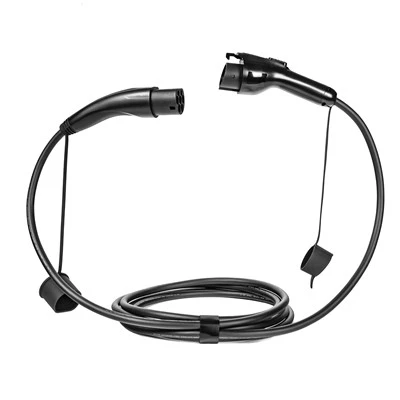
Tethered or untethered: Tethered chargers have a fixed cable attached, whereas with untethered chargers you need to use your own separate cable.
FAQ
As one of the best type 1 ev charger manufacturers and suppliers in China, we warmly welcome you to wholesale cheap type 1 ev charger from our factory. All our products are with high quality and competitive price.
tesla type 1 charger, ev charger type 1, ev charging type 1