

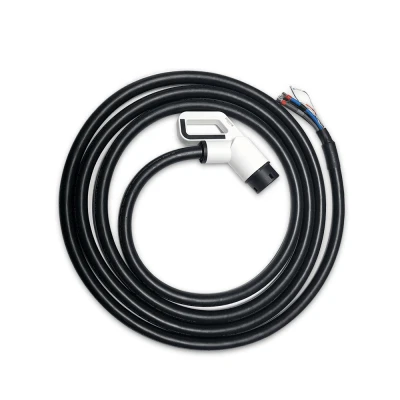
Type 1 Tethered Cable
The Type 1 Tethered Cable Manufacturer!
APEKS is a forward-looking enterprise that is actively involved in the research, development, manufacturing, and sales of electric vehicle charging products, specifically electric vehicle connectors, portable electric vehicle chargers, and electric vehicle cables. They have achieved notable certifications for their products, including ISO9001:2015 and IATF16949:2016 quality management system certifications, as well as essential testing and certification marks such as TUV, CE, UKCA, UL, and CQC.


Why Choose Us
Professional team
The company boasts a dedicated R&D team of over 100 professionals with over a decade of experience in electronic power supplies. Their expertise spans various domains, including materials, structures, electronics, appliances, software, hardware, and technology.
Technology Certification
APEKS have achieved notable certifications for their products, including ISO9001:2015 and IATF16949:2016 quality management system certifications, as well as essential testing and certification marks such as TUV, CE, UKCA, UL, and CQC.
Production Equipment
APEKS have a well-equipped manufacturing facility with over 200 large-scale production machines, coupled with well-established production, quality inspection, and transportation processes.
Global Sales
APEKS caters to an impressive list of customers, including well-known brands such as BYD, NIO, VESTEL, and VORWERK. Their global presence is evident, with products exported to more than 60 countries.
Eight materials and standards commonly used in EV cables




(1) Application of XLPE in EV cables
XLPE is mainly used for high-voltage cables in the car. The temperature resistance is good enough to burn red with an electric soldering iron, and it will remain on it for 10-20 seconds without damage. In 2017, the high-voltage cable in the car is mainly made of XLPE. Its standards in different application fields are as follows:
High voltage cable: ISO 6722, QC/T 1073, CQC1122/ DECRAK179 Charging cable: CQC1103 -1105, DECRA K175
(2) Application of TPE in EV cables
Compared with other cable materials, TPE has the advantages of adjustable softness, good touch, small specific gravity and high cost performance. Its standards in different application fields are as follows:
High voltage cable ISO 6722, QC/T 1073, CQC1122/ DECRA K179 Charging cable CQC1103 -1105, DECRA K175 EN50620, UL62
(3) Application of TPU in EV cables
TPU is mainly used in Europe, and some large cable factories in southern and central China want to develop TPU materials. Its standards in different application fields are as follows:
Charging cable CQC1103 -1105, DECRA, K175 EN50620, UL62
(4) Application of EPR in EV cables
EPR is used more in Europe, and is generally used in the core wire of charging piles. Its standards in different application fields are as follows:
High voltage cable ISO 6722, QC/T 1073, CQC1122/ DECRA K179 Charging cable CQC1103 -1105, DECRAK175, EN50620, UL62
(5) Application of silica gel in EV cables
Silicone has excellent heat resistance properties, up to 200 degrees. It also has a softness of 60-85A. Its standards in different application fields are as follows:
ISO 6722, QC/T 1073, CQC1122/ DECRA K179
(6) Application of PVC/HNBR in EV cables
This material is currently the most used in China because of its excellent feel and softness. However, due to the halogen content, environmental protection issues need to be resolved in the future. Its standards in different application fields are as follows:
Charging cable: CQC1103 -1105, DECRAK175, UL62
(7) Application of CPE/CR in EV cables
Compared with other cable materials, CPE/CR has better oil resistance and crack resistance. Its standards in different application fields are as follows:
Charging cable: CQC1103/CJS4522
(8) Application of TPV in EV cables
TPV appears less in the market, because the processing temperature is high, more than 200 degrees, if there is no suitable color masterbatch, it is easy to change color.
Its standards in different application fields are as follows:Charging cable: CQC1103
Choosing the size of your EV charging cable purely comes down to your situation. If you need a cable to stretch around your house to reach your drive, you might require a longer cable (I.e 15m or 20m charging cable). If there is only a short distance between your ev charging station and your car, you might only require a short charging cable (3m or 5m charging cable). If you are using the charging cable in public it might be wise to choose a longer cable, this way you won't get stuck in a situation where your ev charging cable won't reach the car you are trying to charge. The more popular electric cars become, you might need to stretch your cable across 3/4 parking spaces, so this might be worth considering before you purchase an ev charging cable.
EV Cable Uses
Our EV cables are designed for use in the installation of electric vehicle charging points. This innovative cable offers a complete solution for where both power and data are required, achieving a quicker, easier and neater installation. The benefit of this of course is being able to use just a single cable, compared with a previously complicated system of pulling in multiple cable types to achieve the same result. The EV cable consists of power conductors and data cables that are rated to the same nominal voltage; therefore, segregation of power and data is not required.
Available in 3 core and 5 core variations that meet the requirements of single and three phase EV charge points respectively.
The cable incorporates power conductors and a 2 core screened data cable, encapsulated in a double sheathed design for extra protection. These cables are designed to be installed in air, clipped to surface, on cable tray/ ladder work and embedded in concrete. The cables can be laid direct in the ground providing that suitable mechanical protection is in place.
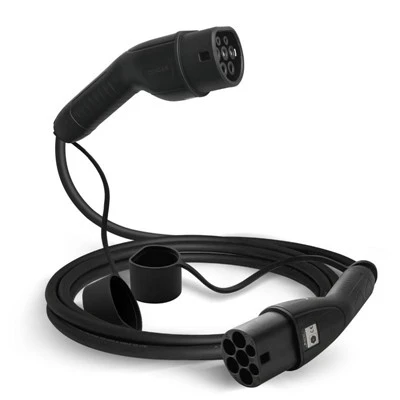
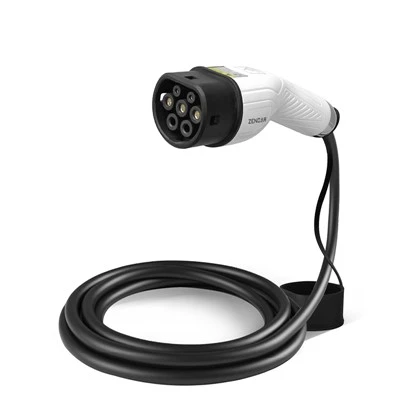
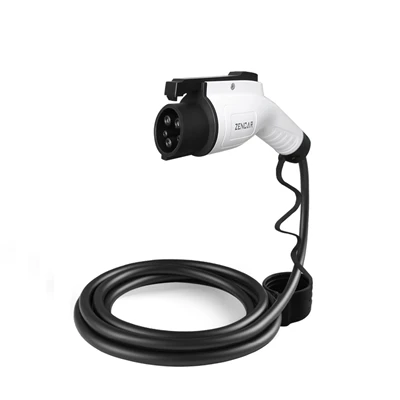
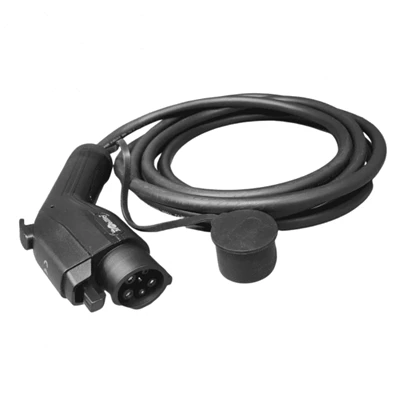
Just like charging your phone, each type of vehicle model will require a different kind of cable to make the right connection. There's a port on the car and another on the charging station, and the cable will need to plug in to both of them. Most electric cars will have one of two different cable connector plugs, these are aptly named Type 1 and Type 2 connectors.
FAQ
As one of the best type 1 tethered cable manufacturers and suppliers in China, we warmly welcome you to wholesale cheap type 1 tethered cable from our factory. All our products are with high quality and competitive price.
ev car charging cable