

EV Charging Socket
Leading Manufacturer of EV Charging Socket
APEKS EV is a trusted B2B manufacturer dedicated to producing high-performance EV charging sockets for residential, commercial, and public charging applications. Backed by a self-built smart factory and advanced automation lines, we deliver precision-engineered products that ensure excellent conductivity, waterproof protection, and long service life. With strong technological innovation capability, our smart charging systems support APP-based remote monitoring, timed charging, and energy consumption analysis, helping operators improve efficiency and management. We provide one-stop OEM/ODM solutions for charging operators, automotive manufacturers, and energy companies, supporting sample applications, batch customization, and joint R&D to meet diverse industrial needs. Join hands with APEKS EV to redefine the safe, smart, and efficient charging experience with reliable quality and global service support.


Our APKES modular infrastructure charging sockets are at the heart of AC charging stations and home chargers, offering versatile charging solutions. They support Mode 3 vehicle battery charging via both 1-phase and 3-phase charging cables, delivering charging power ratings of up to 26 kW. Compliant with the Type 2 AC charging connector standards set by IEC 62196, these sockets are perfectly suited for installation in AC charging stations.
With our innovative modular system, you have the freedom to tailor your home charger or charging station. You can handpick the specific components that align with your preferences and design a personalized charging solution that fits your needs seamlessly. Whether it's for home use or public charging stations, our customizable sockets provide the flexibility and reliability you require for efficient and safe electric vehicle charging.

Professional EV Socket Manufacturer
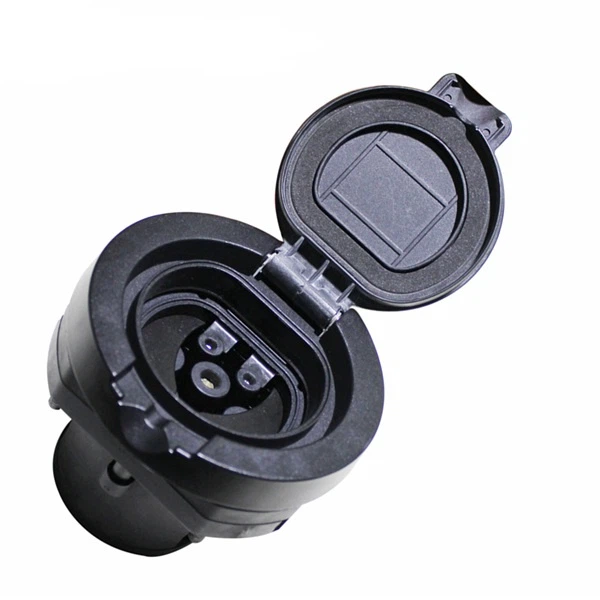
1、Modular system provides maximum flexibility in your charging station design
2、Charging status is clear at a glance with colorful LED indicators
3、Prevent overheating with precise temperature measurement
4、Flexible installation and easy maintenance via plug-in cables
5、Features fully molded contacts that are water and stain resistant
6、Developed and produced in accordance with IATF 16949 automotive standards and ISO 9001
7、Fiberglass reinforced shell resists harsh weather and vandalism
8、Quick status detection via color LED display and intuitive one-hand operation
9、Glows, flashes and pulses in various colors via freely controllable multi-color LEDs/10、
10、Precision light guide technology ensures uniform light pattern and optimal light diffusion
11、Powering the LEDs via mounting screws simplifies installation
Video
What is The Maximum Charging Rate Supported By an EV Charging Socket?
The maximum charging rate supported by an Electric Vehicle (EV) charging socket varies depending on the type of charging standard and the specific capabilities of the charging infrastructure and electric vehicle. Level 1 charging typically operates at a lower rate, delivering around 2 to 5 miles of range per hour, while Level 2 can offer faster charging, ranging from 10 to 60 miles of range per hour. Fast-charging standards like CCS and CHAdeMO can provide even higher charging rates, potentially reaching over 150 kW, allowing for rapid replenishment of an electric vehicle's battery. It's essential for electric vehicle owners to be aware of the charging capabilities of their vehicle and the charging station to optimize charging speed.
Can An EV Charging Socket Be Used With Any Electric Vehicle?
The compatibility of an Electric Vehicle (EV) charging socket with any electric vehicle depends on the charging standard adopted by both the vehicle and the charging station. Electric vehicles are manufactured with a specific type of charging port, and charging stations are designed to accommodate particular standards. While efforts are being made to standardize connectors for interoperability, it's crucial for EV owners to ensure that their vehicle's charging port matches the charging socket at a given station. Additionally, advancements in charging technology are working towards universal solutions to enhance compatibility and simplify the charging experience for electric vehicle users.

Material of EV Charging Socket
Common materials for electric vehicle charging sockets include strong plastics, high-grade polymers, and corrosion-resistant metals such as stainless steel. These materials were chosen for their ability to withstand exposure to the elements, resist corrosion, and provide reliable electrical connections over extended periods of time. The high-quality materials used in manufacturing the electric vehicle charging socket help improve its overall durability, making it suitable for outdoor installations and multiple environmental scenarios. Some charging socket designs include protective features for added safety, such as seals or covers to protect internal components from moisture and dust.
How Durable is An EV Charging Socket?
The durability of an Electric Vehicle (EV) charging socket is a critical factor influenced by the quality of materials, construction, and design. High-quality charging sockets are designed to withstand frequent usage and environmental conditions. They are often built with robust materials, such as durable plastics and metals, to resist wear and tear. Weatherproofing features protect against elements like rain and dust, enhancing the socket's longevity. The durability is also influenced by the mechanical components, such as the locking mechanism, which should be designed for repeated insertions and removals. Regular maintenance and adherence to usage guidelines contribute to the overall longevity and reliability of an EV charging socket, ensuring it continues to provide a secure and efficient charging experience over an extended period.

How Many EV Charging Sockets Can a Typical Electric Vehicle Accommodate?
The number of electric vehicle (EV) charging sockets that a typical electric vehicle can accommodate depends on the vehicle's design and charging capabilities. Most electric vehicles are equipped with a single charging port, which corresponds to one charging socket. However, there are electric vehicles designed with multiple charging ports, enabling them to accommodate more than one charging socket simultaneously. These configurations are often seen in electric vehicles with larger battery capacities or those designed for faster charging. The choice of charging socket is crucial for owners, ensuring compatibility with the charging infrastructure available and optimizing charging speed based on the vehicle's capabilities.
Are There Any Safety Features Built Into an EV Charging Socket?
Ground fault protection
Many Electric Vehicle (EV) charging sockets are equipped with ground fault protection mechanisms, which can detect any imbalance in the electrical current and promptly shut off power to prevent electrical hazards.
Overcurrent protection
To safeguard both the vehicle and the charging infrastructure, EV charging sockets often include overcurrent protection features. These mechanisms prevent excessive current flow, protecting against overheating and potential damage.
Locking mechanism
Some charging sockets have a secure locking mechanism to ensure a stable and reliable connection during the charging process. This feature enhances safety by preventing accidental disconnections that could lead to electrical arcing.
Temperature monitoring
EV charging sockets may incorporate temperature monitoring systems to detect overheating during charging. If temperatures exceed safe limits, the charging process can be halted to prevent potential fire hazards.
Can an EV Charging Socket Be Used in Wet Conditions?
EV charging sockets are designed with weather-resistant features, allowing them to be used in wet conditions. The sockets are typically equipped with ingress protection (IP) ratings that indicate their resistance to dust and water. Commonly, charging sockets have an IP54 or higher rating, ensuring protection against splashing water and dust ingress. This design enables electric vehicle owners to safely charge their vehicles in various weather conditions, including rain.
What is The Difference Between a Level 1, Level 2, and DC Fast Charging Socket?
Level 1 charging utilizes a standard household outlet and provides the slowest charging rate, typically delivering around 2 to 5 miles of range per hour. Level 2 charging, often found in public charging stations and home installations, uses higher voltage and current, offering a faster charging experience—up to 25 miles of range per hour. DC Fast Charging, on the other hand, employs direct current and provides a significantly higher charging power, allowing for rapid charging, with some systems delivering up to 100 miles of range in approximately 20-30 minutes. While Level 1 and Level 2 are commonly used for overnight or daily charging, DC Fast Charging is geared towards quick refueling on longer journeys. The specific charging socket types associated with each level may vary, such as Type 1 or Type 2 for Level 2 AC charging and CCS or CHAdeMO for DC Fast Charging.
Prioritize safety by turning off the electric vehicle and disconnecting it from the charging station to eliminate any electrical hazards. Identify the specific charging socket type compatible with your electric vehicle, such as Type 1, Type 2, CCS, or CHAdeMO. Seeking professional assistance, preferably from certified electricians or service technicians familiar with electric vehicle charging systems, is highly recommended due to the electrical complexity involved. Once the damaged socket is removed, the new one can be installed, followed by a thorough testing procedure to guarantee the correct and secure functioning of the new charging socket.
Application of EV Charging Socket
Public charging stations
EV charging sockets are prominently featured in public charging stations, providing a standardized interface for electric vehicle owners to connect and charge their vehicles conveniently.
Residential charging units
In residential settings, EV charging sockets are integrated into home charging units, allowing electric vehicle owners to charge their vehicles conveniently at home, promoting accessibility and encouraging EV adoption.
Commercial and workplace charging
Businesses and workplaces often install EV charging sockets in their parking facilities to support employees and customers who drive electric vehicles, contributing to sustainable transportation solutions.
Destination charging
EV charging sockets are strategically placed at destinations like hotels, restaurants, and tourist attractions, encouraging electric vehicle adoption by providing charging infrastructure at popular destinations.

The main elements include the socket itself, which interfaces with the vehicle's charging port, ensuring a secure and efficient connection. The cable, often equipped with a durable and flexible design, serves as the conduit for the flow of electrical energy between the charging station and the EV. Embedded within the socket is a communication interface that facilitates data exchange between the vehicle and the charging infrastructure, allowing for authentication, monitoring, and control of the charging session. Safety features, such as thermal sensors and overcurrent protection, are integrated to ensure the well-being of both the EV and the charging infrastructure during the charging process.
Certificate

FAQ
Q: What is an EV charging socket?
Q: How does an EV charging socket work?
Q: What are the different types of EV charging sockets available?
Q: What is the difference between a Level 1, Level 2, and DC Fast Charging socket?
Q: What are the standard dimensions and specifications of an EV charging socket?
Q: How many EV charging sockets can a typical electric vehicle accommodate?
Q: Can the charging socket of an electric vehicle be replaced or upgraded?
Q: What is the maximum charging rate supported by an EV charging socket?
Q: How long does it take to charge an electric vehicle using an EV charging socket?
Q: Can an EV charging socket be used with any electric vehicle?
Q: Are there any safety features built into an EV charging socket?
Q: Can an EV charging socket be used in cold weather conditions?
Q: How often should the charging socket of an electric vehicle be inspected and maintained?
Q: What should I do if I notice any damage or malfunctioning of the charging socket?
Q: Can I charge my electric vehicle using a regular household outlet?
Q: How do I know if my electric vehicle is fully charged?
Q: Can I leave my electric vehicle plugged in after it is fully charged?
Q: Can I charge my EV even if the battery is not completely depleted?
Q: Are there any specific considerations for cable management during charging?
Q: Why is it essential to align my vehicle properly when using a public charging station?
As one of the best ev charging socket manufacturers and suppliers in China, we warmly welcome you to wholesale cheap ev charging socket from our factory. All our products are with high quality and competitive price.
adapter ccs type 2, , EV Charging Accessories