

Portable EV Charger
The Portable EV Charger Manufacturer!
APEKS is a forward-looking enterprise that is actively involved in the research, development, manufacturing, and sales of electric vehicle charging products, specifically electric vehicle connectors, portable electric vehicle chargers, and electric vehicle cables. They have achieved notable certifications for their products, including ISO9001:2015 and IATF16949:2016 quality management system certifications, as well as essential testing and certification marks such as TUV, CE, UKCA, UL, and CQC.


Why Choose Us
Professional team
The company boasts a dedicated R&D team of over 100 professionals with over a decade of experience in electronic power supplies. Their expertise spans various domains, including materials, structures, electronics, appliances, software, hardware, and technology.
Technology Certification
APEKS have achieved notable certifications for their products, including ISO9001:2015 and IATF16949:2016 quality management system certifications, as well as essential testing and certification marks such as TUV, CE, UKCA, UL, and CQC.
Production Equipment
APEKS have a well-equipped manufacturing facility with over 200 large-scale production machines, coupled with well-established production, quality inspection, and transportation processes.
Global Sales
APEKS caters to an impressive list of customers, including well-known brands such as BYD, NIO, VESTEL, and VORWERK. Their global presence is evident, with products exported to more than 60 countries.
Advantages of Portable EV Charger
Unmatched Convenience with Portable EV Charging
The biggest advantage of portable EV charging is convenience. Whether at home, visiting friends, or on a road trip, you can charge your car without relying on public charging stations. It allows you to charge anywhere there's an available power source. Imagine pulling over at a rest stop, plugging into a standard outlet, and continuing your journey stress-free.
Peace of Mind for Long Trips
Range anxiety is a common concern for many EV owners, especially during long journeys. A portable EV charger acts as a safety net. You can plug in and top up your battery even in an area with limited charging infrastructure. This peace of mind is invaluable during road trips or unexpected detours. For instance, if you're exploring rural areas or camping in remote locations, having a portable charger ensures you're never stranded.
The Cost Benefits of Portable EV Charging
Relying solely on public fast chargers can be expensive. Portable EV chargers allow you to use standard outlets, significantly reducing charging costs. According to the U.S. Department of Energy, public fast-charging stations can cost up to $0.50 per kWh, while home charging costs are often below $0.15 per kWh. Plus, there's no need to invest in multiple charging installations if you frequently travel between locations. Consider this: public fast charging stations can cost up to $0.50 per kWh, while home charging costs are often below $0.15 per kWh. Over a year, this could result in substantial savings for regular EV drivers.
Easy to Use and Travel-Friendly
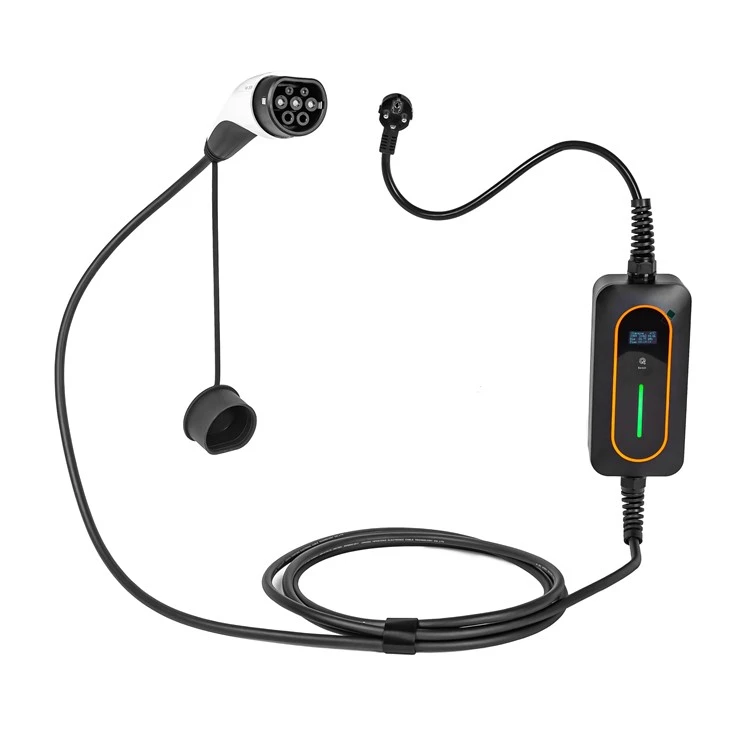
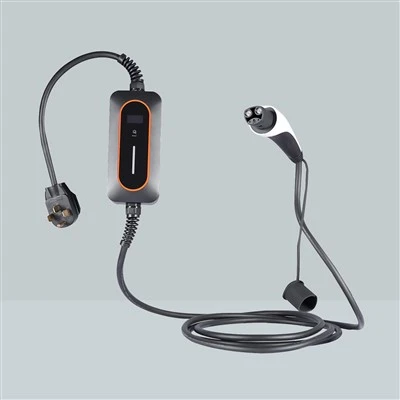
These chargers are lightweight and compact, making them perfect for travel. You don't need special installation skills; just plug it into a compatible socket, and you're ready. This ease of use is especially beneficial for those new to EV ownership. Some models have intuitive LCD screens displaying charging status, voltage, and current levels for real-time monitoring.
Versatile Compatibility with Portable EV Chargers
Most portable EV chargers support multiple plug types, ensuring compatibility with different EV models. Whether you own a Tesla, Nissan Leaf, Hyundai Kona, or any other electric vehicle, a portable charger can adapt to your needs. Some even feature adjustable current settings, smart displays, and built-in safety mechanisms like overcurrent and temperature protection for added security.
Types of Portable EV Charging Stations
Level 1 Chargers
What They Are: These are your basic chargers, often coming with the EV when you buy it.
Charging Speed: Slow, usually providing about 3 to 5 miles of range per hour.
Best For: Overnight charging or emergency top-ups.
Level 2 Chargers
What They Are: A step up from Level 1, these chargers require a 240-volt outlet.
Charging Speed: Moderate, offering around 10 to 60 miles of range per hour.
Best For: Home charging and public charging stations.
DC Fast Chargers
What They Are: The heavy hitters in the portable charging game, but they're not as "portable" due to their size.
Charging Speed: Fast, delivering up to 100 miles of range in just 20 minutes.
Best For: Long road trips where time is of the essence.
Solar-Powered Chargers
What They Are: Eco-friendly chargers that harness the power of the sun.
Charging Speed: Varies, depending on sunlight availability. Slowest charger available.
Best For: Off-grid adventures and reducing your carbon footprint.
Use a Portable EV Charger
Setup and Connection
Ensure your portable EV charger is compatible with your vehicle. Extend the charger's cable fully to prevent overheating and plug it into a suitable outlet—household outlet.
01
Connecting to Your Vehicle
Securely connect the charger to your vehicle's charging port, ensuring there are no obstructions. An indicator on the charger or vehicle's dashboard should confirm a successful connection.
02
Monitoring the Charge
Monitor the charging status through the charger's display or a smartphone app, if available. It's generally recommended to charge the battery up to 80% to optimize battery health.
03
Completing the Charge
Disconnect the charger from your vehicle first and then from the power source. Store the charger properly, coiling the cable loosely and keeping it in a dry place to prevent damage.
04
Safety Tips
Regularly check the charger for damage and never use it in wet conditions unless it is waterproof. Always adhere to the manufacturer’s safety and usage instructions.
05
Considerations When Choosing a Portable EV Charger
Charging Speed: Look for a charger with adjustable power levels to control the charging speed. Higher power levels will charge your vehicle faster but may require a more robust electrical outlet.
Compatibility: Ensure the charger is compatible with your specific make and model of EV. Some chargers may come with adapters to fit different types of charging ports.
Portability: Consider the size and weight of the charger, as well as any additional accessories like carrying cases or cable organizers.
Price: Portable EV chargers can vary widely in price. Determine your budget and look for a charger that offers the best balance of features and affordability.
FAQ
As one of the best portable ev charger manufacturers and suppliers in China, we warmly welcome you to wholesale cheap portable ev charger from our factory. All our products are with high quality and competitive price.
portable dc fast charger for ev, portable dc charger for ev, portable dc fast charger