

Charger Type 1
The Charger Type 1 Manufacturer!
APEKS is a forward-looking enterprise that is actively involved in the research, development, manufacturing, and sales of electric vehicle charging products, specifically electric vehicle connectors, portable electric vehicle chargers, and electric vehicle cables. They have achieved notable certifications for their products, including ISO9001:2015 and IATF16949:2016 quality management system certifications, as well as essential testing and certification marks such as TUV, CE, UKCA, UL, and CQC.


Why Choose Us
Professional team
The company boasts a dedicated R&D team of over 100 professionals with over a decade of experience in electronic power supplies. Their expertise spans various domains, including materials, structures, electronics, appliances, software, hardware, and technology.
Technology Certification
APEKS have achieved notable certifications for their products, including ISO9001:2015 and IATF16949:2016 quality management system certifications, as well as essential testing and certification marks such as TUV, CE, UKCA, UL, and CQC.
Production Equipment
APEKS have a well-equipped manufacturing facility with over 200 large-scale production machines, coupled with well-established production, quality inspection, and transportation processes.
Global Sales
APEKS caters to an impressive list of customers, including well-known brands such as BYD, NIO, VESTEL, and VORWERK. Their global presence is evident, with products exported to more than 60 countries.
Ev charging cable technical data
|
Rated Voltage |
AC 300/500V; 450/750V DC1000V |
|
Rated Temperature |
-40℃~105℃ |
|
Insulation resistance |
≧0.037MΩ.km at 60℃ |
|
Flame Retardant test |
VW-1 test method comply with UL2556 |
|
Min Bending Radius |
6*OD |
|
Dielectric Voltage |
AC2.5kV/15min no breakdown |
|
Cold bending |
-40℃/16h no cracks |
|
Hot Shock |
150℃/1h no cracks |
|
Oil Resistance |
IRM902,IRM903,Gasoline 20h OD Variation≦15%,No cracks. |
|
Acid and Alkali Resistance |
168h,Tensile Strength Change≦30%,Elongation≧100% |
|
Crash Resistance, Vehicle drive over |
5KN,8km.h,220Kpa,no breakdown |
|
Environment-friendly performance |
Comply with ROHS and REACH |
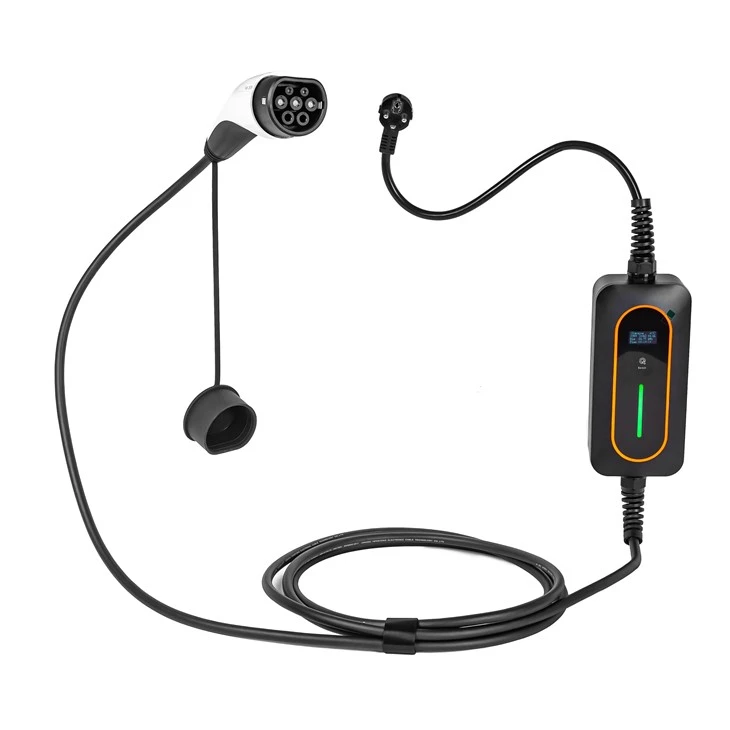
A home charging cable is reliable if it is certified according to European standards, starting with the CE marking, which certifies compliance with EU directives on electrical safety, electromagnetic compatibility and materials.
It is critical that the cable complies with IEC (International Electrotechnical Commission) standards, which specifically regulate home electric vehicle charging equipment, such as IEC 62196 for connectors and sockets.
Best Length EV Charging Cable for Home Charging
Measure the Distance:
See how far your parking spot is from the charger, including any charger and port heights.
Parking Flexibility:
If the parking is done slightly differently at times, perhaps slightly more length is more flexible.
Charging Port Position:
The port's location on your EV affects the needed cable length. Front ports generally require shorter cables than rear ports.
Safety and Convenience:
Avoid overly long cables to prevent management issues and safety risks.
There are 3 categories of charging speeds. These are slow, fast, and rapid. Slow charging can on average take 6-12 hours on power output of about 3kW. Fast charging can take up to 4 hours to fully charge on 7kW-22kW. Rapid charging can take up to an hour for a full charge from a power output of 50kW-120kW. You can also have alternating current (AC) or direct current (DC) charging. DC units are predominantly tethered so you do not have to worry about the charge point socket.
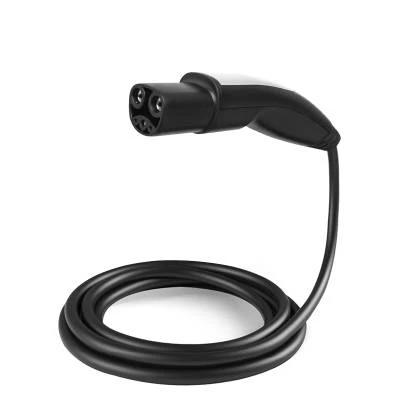
Connectors will depend on the type of charger in use and the vehicle inlet port. Here we will look at the different connectors used in charging and speeds you can expect. We will discuss from the slowest to fastest charging cables.
FAQ
As one of the best charger type 1 manufacturers and suppliers in China, we warmly welcome you to wholesale cheap charger type 1 from our factory. All our products are with high quality and competitive price.
EV Charging Cables, Moder 2 EV Charger, Charger Type 1