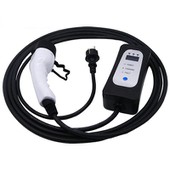
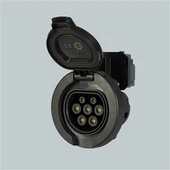
The Outlet is the Bridge Between Electric Vehicles and the Grid
The widespread adoption of electric vehicles is transforming the global energy landscape, and charging infrastructure plays an irreplaceable role in this transformation. Whether it's daily charging for home users or high-speed charging at public fast-charging stations, the charging outlet serves as the direct link between electric vehicles and the grid. While seemingly a simple interface, it determines whether electric vehicles can quickly, safely, and efficiently access electricity. Due to regional differences in electric vehicle development, multiple outlet standards have emerged globally, each reflecting regional technological choices and policy guidance.
Global Mainstream EV Charging Inlet Standards
There are currently four major charging outlet standards in the global market: SAE J1772, IEC 62196 Type 2, GB/T, and Tesla's NACS.
- In North America and Japan, the most common is SAE J1772, also known as Type 1. This five-pin connector supports single-phase AC charging. It meets the needs of daily slow charging at home and, under certain conditions, can also support higher-power Level 2 charging. Thanks to its wide compatibility and mature infrastructure, SAE J1772 has become the foundational standard for electric vehicle charging in North America.
- In Europe, the market is dominated by IEC 62196 Type 2, also known as the Mennekes socket. This standard not only supports single-phase charging but also three-phase AC power, enabling higher charging power at public charging stations. Since its adoption as an official EU standard in 2013, Type 2 sockets have virtually covered the entire European market and have gradually expanded to regions such as the Middle East and Australia.
- China has its own independent standard, GB/T. Unlike other regions, China separates AC and DC interfaces, creating two socket systems. The AC GB/T is primarily used for home charging and low-power charging, while the DC GB/T is the core interface for fast charging, capable of output far exceeding 100 kilowatts. This independent system has been widely adopted in China and has become crucial for supporting the world's largest electric vehicle market.
- As for Tesla, it has established its own NACS standard in North America. The most notable feature of this socket is its compact size, ability to support both AC and DC charging, and a maximum power of 250 kilowatts. Leveraging the extensive reach of Tesla's Supercharger network, NACS was once a closed system. However, in recent years, Tesla has gradually opened up its interfaces, attracting a growing number of automakers to announce their adoption of the standard, potentially propelling it to mainstream adoption in North America.
Comparison of Technical Parameters and Applications
From a technical perspective, the various standards differ in power, voltage, and compatibility. SAE J1772 is primarily limited to single-phase AC, suitable for homes and public use. Type 2, due to its support for three-phase power, offers higher efficiency in European public charging stations. China's GB/T utilizes both AC and DC systems, offering significant advantages, particularly in fast charging. NACS, with its compact size, high performance, and strong interface compatibility, has become a key selling point for Tesla.
These differences reflect the varying pace of electric vehicle development across different regions. North America tends to rely primarily on home charging, Europe emphasizes the development of public high-speed charging networks, and China strives to lead in fast charging to meet the demands of its massive new energy vehicle fleet. Tesla has forged a unique path through technology integration and its own network.
Convergence of Sockets and Charging Methods
As the electric vehicle market matures, the distinction between sockets and charging methods is blurring. In the past, there was a strict distinction between AC and DC sockets, but now more and more standards are evolving towards multifunctionality. For example, Europe's CCS combines Type 2 with a DC interface, creating a comprehensive solution that supports both AC and DC. Tesla's NACS, on the other hand, is a single interface compatible with both AC and DC, reducing user confusion regarding different charging methods.
This convergence trend is driven by user demand for convenience. Car owners want to be able to charge using a single interface, whether at home or in public, without having to carry multiple adapters. Universalization and integration may become the mainstream trend in the future, but achieving this will still require continuous effort from all parties involved in standardization and compatibility.
Deployment Choices by Users and Carriers
For the average car owner, choosing the right charging socket depends primarily on the region and vehicle model. In North America and Japan, installing an SAE J1772 household outlet is the most reliable option; in Europe, Type 2 is the inevitable choice; in China, GB/T is the sole standard; and Tesla owners need to consider NACS compatibility. As more countries introduce cross-standard adapters, users will have more flexible options.
Multi-standard compatibility has become a trend for operators and charging station builders. Fast-charging station deployments typically offer Type 2, CCS, CHAdeMO, and even NACS interfaces to ensure coverage for as many vehicle models as possible. At the same time, operators must also monitor future standard evolution to avoid premature obsolescence due to technological backwardness.
Leading Manufacturing Advantage: How APEKS Sets Industry Benchmark
APEKS demonstrates significant comprehensive advantages in charging outlet manufacturing.
First, APEKS holds multiple international certifications, including UL, CE, and RoHS, ensuring its products meet global standards for safety and reliability. Its production process, encompassing R&D and design, material sourcing, metal processing, quality inspection, packaging, and delivery, adheres to a strict quality management system at every stage. APEKS uses high-quality copper alloy and industrial-grade plastic to ensure excellent conductivity and weather resistance. CNC machining, die-casting, and stamping are employed in the manufacturing process to ensure component precision and durability. Electrical performance testing and environmental stress testing further verify the product's stability under various conditions.
APEKS's products cover various socket standards, including Type 1, Type 2, and CCS, and offer customization services to meet diverse customer requirements for appearance, color, and functionality. The company also possesses comprehensive supply chain management capabilities, enabling rapid order response and on-time delivery.
With certifications such as ISO9001 and IATF16949, as well as support from numerous international testing and certifications, APEKS has become a trusted partner for customers worldwide. Choosing APEKS means choosing a comprehensive service offering of proven technology, reliable quality, and flexible customization.
Balancing Standardization and Regionalization
The development of EV charging outlets is a classic example of a process of intertwined globalization and regionalization. Regional standards are often closely tied to local power grid structures, user habits, and policy environments, making complete standardization unrealistic in the short term. However, in the long term, strong user demand for standardization will drive the gradual convergence of standards.
Regardless of which standard ultimately prevails, the socket, a small interface, will continue to play a decisive role in the electric vehicle industry chain. It not only transmits electrical energy but also impacts user experience, industry competitiveness, and the efficiency of energy transition. Amid the global wave of electrification, the evolution of the EV charging socket is undoubtedly a key area worthy of continued attention.