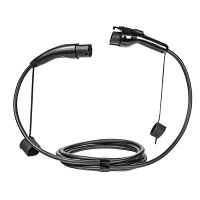
The Key Role of EV Charging Cables
With the growing global energy crisis and the increasing awareness of environmental issues, electric vehicles (EVs) are gradually becoming the mainstream mode of transportation for the future. As an essential part of the EV infrastructure, the development of charging networks directly impacts the adoption rate of electric vehicles. EV charging cables, which connect the electric vehicles to charging stations, are responsible not only for power transmission but also for the charging efficiency, safety, and overall user experience.
Globally, the demand for EV charging cables is rising rapidly. According to market research, the global EV charging cable market is expected to exceed billions of dollars by 2030. To meet this demand, manufacturers are continuously innovating, improving the quality, performance, and compatibility of EV charging cables.
The Rapid Rise of the Global Electric Vehicle Market
In recent years, as governments worldwide have increased their support for green mobility, the sales of electric vehicles have surged exponentially. According to the International Energy Agency (IEA), the cumulative sales of electric vehicles globally have surpassed 10 million units, with this number continuing to grow. It is projected that by 2030, the global EV fleet will exceed 100 million vehicles.
This rapid market growth is not only driving the production of electric vehicles but also accelerating the construction of charging infrastructure. As the number of electric vehicles increases, so does the number of charging stations, each of which requires EV charging cables. Therefore, the rise of the EV charging cable market is a natural result of the rapid development of the global electric vehicle industry.
Technological Advancements in EV Charging Cables
EV charging cables, as the power transmission tools for electric vehicles, have made significant technological progress. In the past, the design and manufacturing of EV charging cables mainly focused on basic power transmission functions. However, with the growing demand for faster and more efficient charging, modern EV charging cables are designed to offer better durability, safety, and smart features.
High-Performance Materials
Modern EV charging cables use high-performance conductive materials, such as copper or aluminum alloys, to ensure higher current capacity and lower energy loss. Additionally, the outer protection layers are made of materials resistant to high temperatures, ultraviolet light, and corrosion, allowing the cables to be used in various environments without degradation.
Smart Technologies
With the advancement of smart charging technology, modern EV charging cables do more than just transmit power. They are equipped with sensors that communicate with both the charging station and the electric vehicle to monitor the current, voltage, and temperature in real-time. This ensures the prevention of overheating, overcharging, and other safety concerns. Moreover, smart charging cables can connect to mobile apps, providing users with real-time charging status updates and device health monitoring.
Fast Charging Technology
To address the issue of long charging times, fast-charging technology has become increasingly common in EV charging cables. High-power charging cables support higher currents, enabling them to deliver more charge to electric vehicles in a shorter time, significantly improving the user experience.
Common Types of EV Charging Cables
EV charging cables are available in various types based on different standards and market requirements. Below are some of the most common types of EV charging cables:
Type 1 EV Charging Cable
Type 1 charging cables follow the American standard and were primarily used in earlier electric vehicle models. The Type 1 cable features a 5-pin design and typically supports a maximum current of 32A, making it suitable for low-power home charging and public charging stations. As EV technology has advanced, Type 1 cables have been gradually replaced by newer standards, but they are still widely used in older electric vehicles.
Type 2 EV Charging Cable
Type 2 charging cables follow the European standard and are commonly used in modern electric vehicles. They support higher charging power, up to 43kW, and are suitable for home, commercial, and public charging stations. Type 2 charging cables are known for their safety and efficiency, making them the most widely adopted standard worldwide.
CCS Charging Cable
The Combined Charging System (CCS) charging cable combines both AC and DC charging functionalities, making it suitable for high-power fast-charging stations. CCS cables are capable of delivering higher charging power and faster charging speeds, which makes them one of the most prominent charging standards for the future of EVs.
Quality Standards and Certifications for EV Charging Cables
With the globalization of EV charging infrastructure, the quality standards and certifications for charging cables have become particularly important. Common quality standards and certifications include:
- IEC 62196: This international standard ensures that EV charging cables meet safety and compatibility requirements.
- UL Certification: This certification indicates that the charging cable meets the safety standards required in the United States.
- CE Certification: This certification ensures that the charging cable complies with the safety standards of the European market.
These certifications ensure not only the safety of the charging cables but also enhance consumer trust, enabling EV charging cables to enter global markets with confidence.
The Rise of Chinese Manufacturers in the EV Charging Cable Market
China is one of the global leaders in the electric vehicle market, and its EV charging cable manufacturers are playing an increasingly important role in the global market. Through continuous innovation, optimized production processes, and improved product quality, Chinese EV charging cable manufacturers have rapidly risen in the international market.
Chinese manufacturers, such as Apeks, have been able to produce high-quality EV charging cables that meet international standards. By leveraging their cost advantages and technological innovations, they have gradually expanded into markets in Europe, North America, and the Asia-Pacific region. As China's electric vehicle industry matures, domestic charging cable manufacturers will continue to lead the global EV charging cable market in the future.
Future Trends of EV Charging Cables: Smart and Eco-friendly
With technological advancements, the future of EV charging cables will be focused on both smart capabilities and environmental sustainability. Smart charging cables will communicate with both the EV and the charging station in real-time, optimizing the charging process and improving efficiency.
In terms of sustainability, more manufacturers are beginning to use recyclable materials in their charging cables, reducing environmental impact. Additionally, wireless charging technology, which is expected to become commercially available in the coming years, may eliminate the need for physical charging cables altogether. This would further improve the convenience and user experience of electric vehicle charging.
The Future and Challenges of the EV Charging Cable Market
EV charging cables play a crucial role in the global transition to electric vehicles. As technology continues to evolve and the global EV market expands, charging cables will continue to improve in terms of efficiency, smart functionality, and environmental friendliness. However, challenges such as increasing charging speeds, reducing costs, and enhancing safety and compatibility remain for manufacturers.
In the coming years, EV charging cables will become more than just power transmission tools; they will be integral components of intelligent transportation systems. The continuous innovation in the charging cable industry will provide strong support for the growth of the global electric vehicle market and contribute to the realization of sustainable mobility.