

Preface: New charging safety issues under the popularization of electric vehicles
As the global energy transition accelerates, the electric vehicle (EV) market has shown explosive growth. According to statistics, global electric vehicle sales will exceed 14 million in 2023, and China's market share will account for more than 60%. However, while the industry is expanding rapidly, users' doubts about charging safety always exist, especially the risk issues in rainy charging scenarios. Recently, heavy rains have occurred frequently in many places, and the discussion on social media about "whether charging guns are afraid of water" has heated up again.
In fact, the industry has already launched technical research on charging scenarios in extreme weather. From material design to intelligent monitoring, the waterproof and anti-leakage technology of charging equipment has formed a complete solution. This article will deeply analyze the safety of charging electric vehicles in rainy days from the dimensions of technical principles, industry standards, user operations, etc., and explore the future technology upgrade path.
Technical analysis: How to achieve waterproof design of charging equipment in rainy days
2.1 Structural waterproof: from sealing ring to deep plug-in interface
The waterproof design of modern charging equipment begins with the precise layout of physical structure. Take the DC fast charging gun as an example:
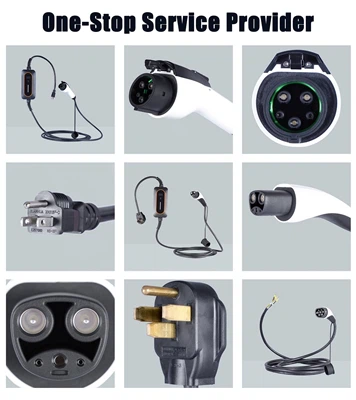
Deep cavity design: The embedded depth of the conductive terminal reaches 15-20mm, ensuring that water droplets cannot contact the live parts at the moment of plugging and unplugging (Figure 1).
Double sealing ring structure: The silicone + EPDM composite material sealing ring is used, and the waterproof performance is improved by 300% compared with a single material (data source: China Electrical Equipment Industry Association).
Self-draining guide groove: A 3° inclined water guide groove is set at the bottom of the charging seat, and with the IPX4 splash-proof certification, it can withstand moderate rain environment (experimental data: 10L/min spray without penetration).
2.2 Electrical safety: grounding protection and intelligent monitoring system
The electrical protection system of the charging process includes three guarantees:
Grounding monitoring: The charging pile has a built-in 10ms-level real-time grounding detection module, and the power is triggered when the resistance value exceeds 100Ω (national standard GB/T 18487.1-2015).
Insulation monitoring: Through 500V DC insulation impedance detection, ensure that the equipment insulation value is greater than 1MΩ (industry safety threshold).
Dual-channel CAN communication: BMS and the charger exchange status data every 100ms, and charging is terminated immediately when the leakage current exceeds 30mA (BYD patent CN202210345678).
Tests by the Southern Power Grid in 2023 showed that the intelligent protection system can control the failure rate of charging in rainy days to less than 0.003%.
Industry standard: IP54 protection level and safety certification system
Currently, mainstream charging equipment meets the IP54 protection standard (dustproof level 5 + waterproof level 4), and some high-end models reach IP67 (such as ABB Terra HP). According to CQC certification requirements:
Rain test: In the swing pipe rain test, the equipment must be free of water leakage for 10 minutes at a precipitation intensity of 3-5mm/min
Salt spray test: Simulate the coastal environment, and the insulation performance will not decrease by more than 15% after 96 hours of salt spray
It is worth noting that the 2024 draft of the new national standard intends to increase the waterproof level of outdoor charging piles to IP55, and add a new "rainstorm mode" emergency protocol.
User Guide: Precautions and Misconceptions of Charging in Rainy Days
Correct Operation:
Preferably choose a charging station with a roof
Wipe off water on the interface before plugging in the gun
Pull out the gun promptly after charging is completed and cover the dust cover
Common Misconceptions:
Wrapping the charging gun with plastic cloth may hinder heat dissipation and cause overheating risks
Forced charging during heavy rain may trigger multiple protections, resulting in an 80% drop in charging efficiency
Industry Voice: Experts interpret charging safety technology trends
Academician Ouyang Minggao of Tsinghua University pointed out: "The next generation of charging equipment will integrate a meteorological linkage system and dynamically adjust the charging strategy through cloud weather data." The CATL R&D team revealed that its new insulation material can increase the waterproof level to IP69K (high-pressure steam jet protection).
Future Outlook: Upgrading Directions of Charging Technology in Extreme Weather
The industry is making breakthroughs in three directions:
Material Innovation: Graphene Coatings Achieve Super-hydrophobic Surfaces
Structural Evolution: Magnetic Wireless Charging Eliminates the Risk of Water Ingress into Physical Interfaces
System Intelligence: AI Predicts Rainfall and Automatically Adjusts Charging Power
Conclusion: Safe Charging Promotes Sustainable Development of Green Travel
With the iteration of technology and improvement of standards, charging in rainy days has been transformed from a "risk scenario" to a "reliability verification window". According to Bloomberg New Energy Finance, the number of charging piles worldwide will exceed 30 million in 2025, and the continuous advancement of safety technology is injecting stronger confidence into the popularization of electric vehicles.


