


Common use areas:
Type 1: Mainly used in North America and parts of Asia. In the United States, most household electric vehicle charging piles and public charging piles are adapted to the Type 1 interface, which is closely related to the development of the local electric vehicle industry and the formulation of electrical standards. In Japan, the Type 1 interface is also common due to its early electric vehicle development plans.
Type 2: Widely used in Europe, Australia, South Africa, New Zealand and other regions. Europe, as an important region for the development of electric vehicles, identified Type 2 as the main charging interface standard at the early stage of infrastructure construction, which makes the public charging pile, private charging pile and vehicle end interface highly unified throughout the European region.
Number of plug pins:
Type 1: Uses a 5-pin plug design, these pins respectively assume different functions, such as power supply, signal transmission, etc. The relatively small number of pins makes the plug more compact in terms of structural design.
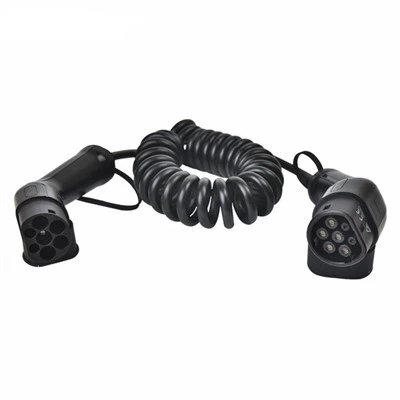
Type 2: A 7-pin plug. The additional two pins further expand its functionality, not only to meet the basic power transmission, but also to provide the hardware foundation for more complex communication and control functions.
Official standard:
Type 1 follows the SAE J1772 standard, which is developed by the American Society of Automotive Engineers and specifies the physical size, electrical performance, communication protocol, etc., of the plug to ensure compatibility between charging devices and vehicles produced by different manufacturers.
Type 2: Based on the IEC 62196-2 standard, which is an international standard, developed by the International Electrotechnical Commission, and is widely recognized and followed worldwide, ensuring the universality of Type 2 interfaces in different countries and regions.

Plug/Cable type:
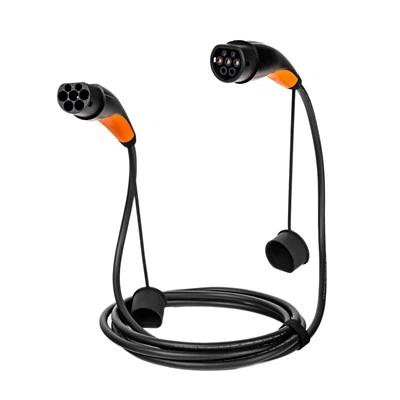
Type 1: Usually the vehicle side is equipped with a plug, the charger side is a socket, and the cable is separate from the charging device. This design is convenient for users to flexibly replace cables of different lengths according to actual use needs to adapt to different charging scenarios.
Type 2: Both ends are plugs, and the charger side is a socket. Its integrated plug design makes it more convenient and fast in the process of plugging and removing, and reduces the potential safety hazards caused by the cable and plug not being tightly connected.
Phase type:
Type 1: Only single-phase power is supported, because the household electricity in its main application area is mostly single-phase power supply. Single-phase electricity is characterized by relatively small current and stable voltage, which is suitable for the slow charging needs of electric vehicles in the general family environment.
Type 2: Supports single-phase and three-phase power supply modes. In some commercial places or industrial environments with high charging speed requirements, three-phase electricity can provide more power and significantly shorten the charging time of electric vehicles.
Maximum home charging power:
Type 1: Limited by single-phase power supply and interface design, it can charge up to 7.4kW in domestic scenarios. This means that using Type 1 charging, it may take a long time to fill an electric car, which is more suitable for a long night charging scenario.
Type 2: Maximum charging power up to 22kW in single-phase mode and 43kW in three-phase mode. The high power charging capability gives the Type 2 a distinct advantage in terms of quick recharge, especially for those who need to replenish a large amount of energy in a short period of time.
Lock type:
Type 1: The locking mode of manual latch is adopted. After inserting the plug, the user needs to manually operate the latch device to fix the plug on the socket. Although this method is relatively simple to operate, there is a certain risk of human negligence.
Type 2: Equipped with automatic locking function, when the plug is inserted into the socket, it automatically triggers the locking mechanism to ensure that the plug is tightly connected to the socket. During the charging process, unless manually unlocked, the plug will not accidentally fall off, greatly improving the safety of the charging process.
2. Advantages of Type 1
Extensive regional adaptation: In regions such as North America and Japan, the Type 1 charging interface is like the "standard key" for local electric vehicles, and is perfectly adapted to a large number of vehicle ports. This means that whether the local electric vehicle owners return to their own garage, use the home charging pile that has already been installed, or on the way out, shuttle through the streets and alleys of the city to find public charging piles, they can quickly find the charging interface that matches the vehicle, just like finding a key that can smoothly open the door, which greatly improves the convenience of daily use of electric vehicles. Let the owner do not need to worry about the incompatible charging interface. This wide adaptability is an important basis for the long-term stable application of Type 1 in these regions, and it is integrated into all aspects of local electric vehicle use, becoming a natural charging choice.
Proven reliability: The Type 1 charging technology did not develop overnight, it has gone through years of market testing and technology polishing. From the embryonic stage of early electric vehicles to today's era of gradual popularity of electric vehicles, Type 1 has always been optimized and improved. At the beginning of its design, it fully considers a variety of complex use environment and working conditions. Whether it is the hot summer with the scorching sun and the temperature of more than 40 degrees, or the cold winter with the cold wind and the temperature as low as minus ten degrees, or the wet and rainy southern region, or even the dusty industrial environment around, Type 1 can stably and reliably deliver electric energy for electric vehicles.

3. Advantages of Type 2
Extreme charging speed: The Type 2 charging interface is the "speed pioneer" in the field of electric vehicle charging. Its unique three-phase power supply mode and high power ceiling give it a strong power transmission capability. In practical use, when the electric vehicle urgently needs to replenish the power, the Type 2 can inject a large amount of electric energy into the vehicle battery in a very short time. To be more efficient and convenient, like adding wings to electric cars, so that it can travel smoothly on long distances.
Excellent charging efficiency: The Type 2 is not only fast to charge, but also excellent in terms of charging efficiency. Due to its ability to provide more power, the Type 2 can charge a vehicle more than some other charging interfaces in the same charging time. This is like using a large pipe and a small pipe to fill the pool at the same time, the large pipe (Type 2) can raise the water level of the pool to a higher position in a shorter time. In places such as public charging stations, time is money, and improving charging efficiency means that more vehicles can be charged in a limited time, reducing the waiting time in line, and improving the utilization rate of charging piles. For companies operating public charging stations, the high charging efficiency of Type 2 can increase the revenue of the site; For users, it can also reduce the time cost of waiting at the charging station, making the charging process more time-saving and labor-saving. It is like an efficient energy transmission channel, so that electrical energy can be converted into the vehicle's driving capacity at the fastest speed and highest efficiency.
Strong regional compatibility: In Europe and other regions, almost all public charging piles have adopted the Type 2 interface. This makes the mobility of electric vehicles across the European region extremely smooth, and owners do not have to worry about finding the right charging interface in different regions. Moreover, with the continuous development of the European electric vehicle industry, the compatibility advantages of the Type 2 are still expanding. It not only fits perfectly with existing local fast charging stations, but also leaves room for future charging technology upgrades and expansions.
Intelligent data interaction: Some Type 2 cables have advanced data communication capabilities, which enables intelligent interaction during charging. Like two intimate partners, a variety of important information can be exchanged in real time between the charging device and the vehicle via the Type 2 cable. Charging status, battery power, charging power and other data are like a "relay race" of information, which is transmitted quickly between the two. Users can easily understand this information through the mobile phone APP or the display on the charging pile, just like having a real-time charging assistant to grasp the charging process at any time. More importantly, this data interaction capability also allows the charging device to intelligently adjust the charging strategy according to the actual needs of the vehicle. When the vehicle battery power is low, the charging device can appropriately increase the charging power and speed up the charging speed; When the battery is close to saturation, the charging device can automatically reduce the power to avoid damage to the battery caused by overcharging.


