

At a time when the electric vehicle industry is developing rapidly, the importance of charging connectors as key components in the charging process is becoming increasingly prominent. Different types of charging connectors are adapted to different charging scenarios and vehicle requirements, and have a profound impact on the energy replenishment experience of electric vehicles. Below, we will comprehensively analyze the various "members" of electric vehicle charging connectors.
Content
1. Basic knowledge of charging connectors
2. Detailed explanation of mainstream charging connector types
3. Application scenarios and adaptation considerations of different connectors
4. Development trends and challenges
1. Basic understanding of charging connectors
Electric vehicle charging is essentially a process of transmitting and converting electric energy. During AC charging (AC), the AC power of the power grid is converted into DC power by the on-board charger to charge the battery; DC charging (DC) skips the on-board charger and the charging pile directly outputs DC power to the battery, which can achieve rapid energy replenishment. The charging connector is the key interface to ensure the safe and efficient transmission of electric energy in this process. It must have good conductivity, sealing, heat resistance, etc., and must also be adapted to different charging protocols and vehicle interfaces.
2. Detailed explanation of mainstream charging connector types
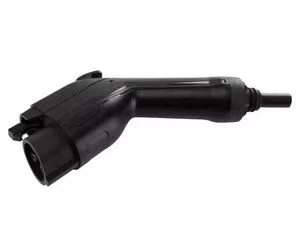
This is an AC charging connector widely used in North America. It looks like a single-pin plug and is suitable for Level 1 and Level 2 AC charging. Level 1 charging can use a household 120V power supply, which has relatively low power; Level 2 charging uses a 240V power supply, which has higher power and can replenish power faster. Its design focuses on plug-in convenience and safety, and has anti-misplugging and anti-electric shock structures. It is often seen in electric vehicle charging scenarios in the North American market, such as home slow charging and public AC charging piles, and is mainly used in American and some Japanese electric vehicles.
2.2 MENNEKES connector (Type 2)
An AC charging connector that dominates the European market. Its plug has 7 contacts, supports higher-power AC charging, and can be adapted to 230V single-phase or 400V three-phase power supplies. The maximum current can reach 32A or even higher (63A in some scenarios). In terms of structural design, it has excellent waterproof and dustproof performance, and is suitable for various outdoor charging environments in Europe, such as urban public charging stations, highway service area charging piles, etc. Many European brand electric vehicles, such as German and French models, use this connector for AC charging.
2.3 CCS connector (Combo type)
It is divided into CCS1 and CCS2. It is a combined connector with DC charging contacts added on the basis of AC charging connector. CCS1 is extended from SAE J1772 (Type 1) and is mainly used in the North American market; CCS2 is extended from MENNEKES (Type 2) and serves Europe and some other regions. They retain the AC charging function and can realize DC fast charging. When DC charging, they can support large current and high power output to meet the rapid energy replenishment needs of electric vehicles during long-distance travel. For example, at highway fast charging stations, many electric vehicles that support fast charging will use CCS connectors to replenish a large amount of power in a short time.
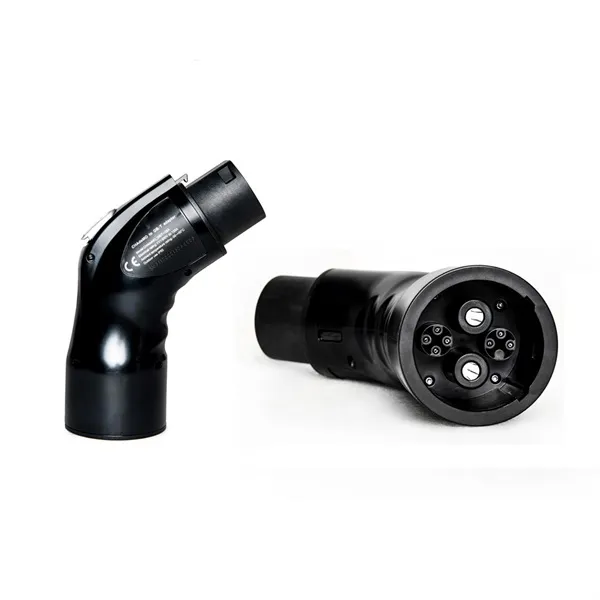

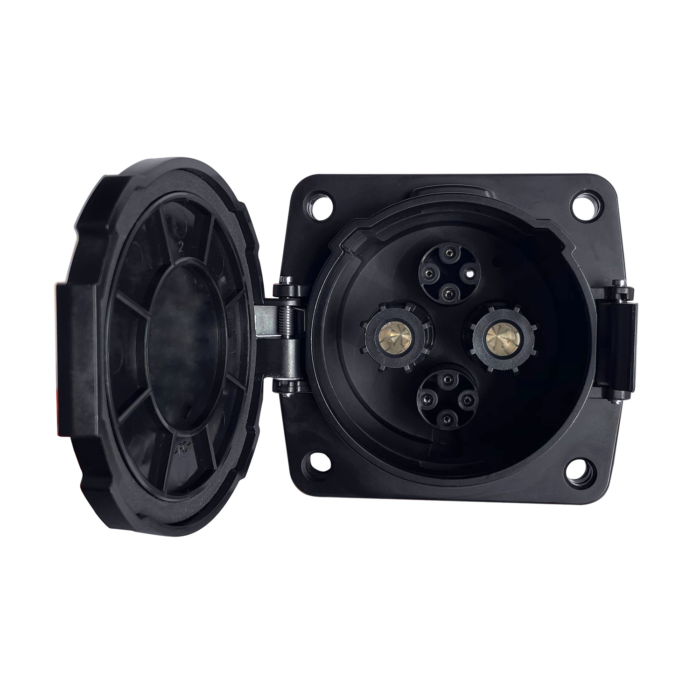
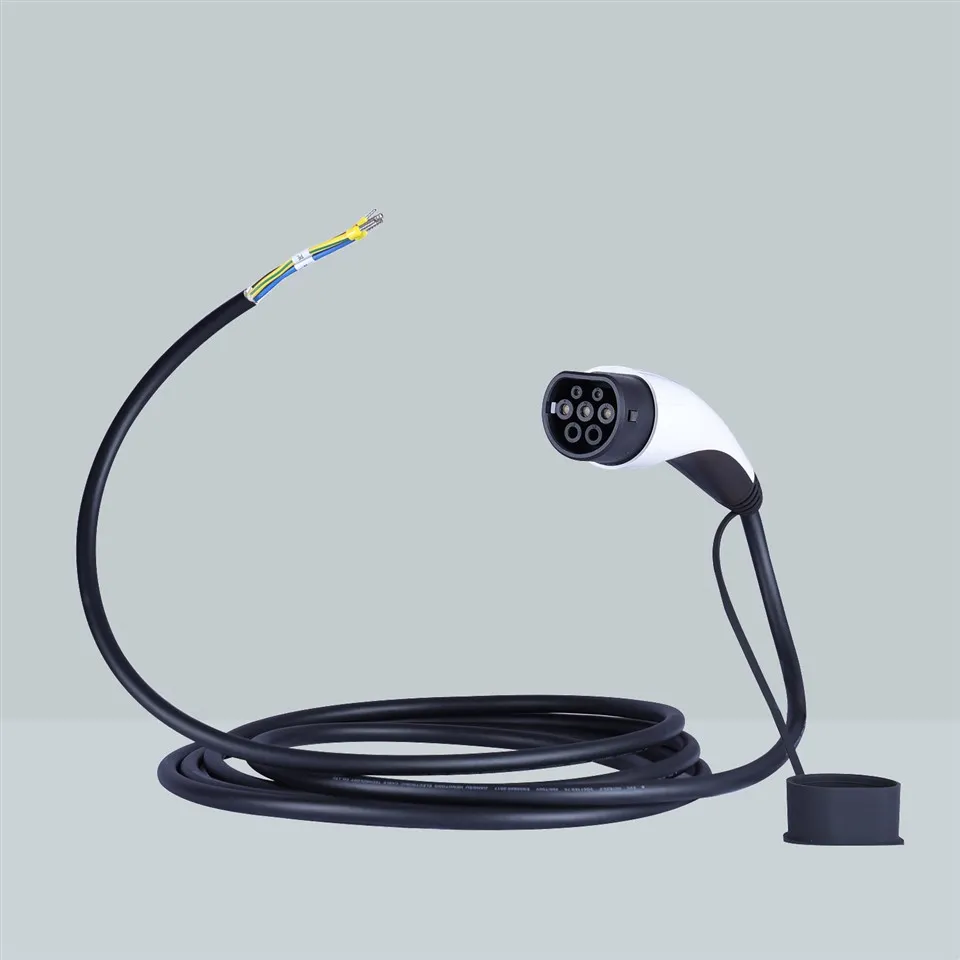
2.4 CHAdeMO connector
It was developed by the Japan Electric Vehicle Association and others and was initially widely used in Japanese electric vehicles. It focuses on DC fast charging, has a unique interface design, can support higher charging power, and has a maximum current of about 200A (different versions have differences). In Japan and in the early days of entering overseas markets, Japanese electric vehicles are commonly seen in charging scenarios. For example, some public DC fast charging stations and charging piles adapted to the CHAdeMO interface can quickly replenish power for Japanese electric vehicles. However, with the promotion of standards such as CCS, its application scope has shrunk to a certain extent, but there are still a large number of devices in use in some areas.
2.5 Tesla Connector (NACS)
Tesla's exclusive charging connector was originally designed to adapt to its own vehicle charging and has AC and DC charging functions. Its interface is small and its design focuses on coordination with Tesla vehicles, which can achieve efficient charging. Tesla's super charging pile network uses this connector to provide fast and convenient charging services for its vehicles. In recent years, Tesla has opened the NACS standard, and many other car companies have also begun to consider adaptation. In the future, it may occupy a wider position in the charging connector market and change the industry landscape.
3. Application scenarios and adaptation considerations of different connectors

In home charging scenarios, AC connectors are more commonly used, such as SAE J1772 (Type 1), MENNEKES (Type 2), and national standard AC GB/T connectors. The power is adapted to the home power environment to meet daily slow charging needs. Public AC charging piles will be configured according to the mainstream standards in the region, such as MENNEKES in Europe, SAE J1772 in North America, and national standard AC in China.
In the DC fast charging scenario where long-distance travel and urgent energy replenishment are needed, DC adapter connectors such as CCS, CHAdeMO, national standard DC GB/T, and Tesla NACS play a role. Highway service areas, urban fast charging stations, etc. will be equipped with a variety of DC connectors, or focus on configuration according to the local vehicle brand distribution and standard promotion.

When choosing connectors, car companies should consider the standards and regulations of the target market and the layout of the charging network. For example, for models facing the European market, MENNEKES or CCS2 are common choices; to enter the Chinese market, they must adapt to the national standard GB/T. At the same time, we should also pay attention to the development of charging technology, such as high-power fast charging for connectors. Higher requirements for current carrying, heat dissipation and other performance.
4. Development trends and challenges
With the improvement of electric vehicle endurance and the development of ultra-fast charging technology, charging connectors need to evolve towards higher power and more efficient transmission, and the requirements for materials, heat dissipation, and structural design are getting higher and higher. At the same time, the integration and unification of global charging standards are also being promoted. For example, Tesla's open NACS, the compatibility and adaptation between different standards can improve the versatility of the charging network and reduce the problem of users' "difficulty in finding piles".
But it also faces challenges. There are still differences in standards in different regions, and the cost of modifying existing charging piles and vehicle interfaces is high. Under high-power charging, the safety and durability of the connector need to be continuously optimized to ensure long-term stable use. However, these challenges also promote industry innovation, prompting the continuous upgrading of charging connectors, and laying a solid foundation for the energy replenishment link for the development of the electric vehicle industry.
In short, there are various types of electric vehicle charging connectors, each of which is suitable for different scenarios. Their development and improvement are related to the construction of the entire electric vehicle energy replenishment ecosystem. In the future, it will continue to iterate to help electric vehicles better integrate into people's travel life.


