Table of Contents
1. Industry Focus: The Rise of Electric Vehicle Charging Connectors
2. Technological Innovation: Shaping the Future of Charging Connectors
3. Safety Assurance: A Key Indicator That Should Not Be Underestimated
4. Market Competition: A Fierce Battlefield of Many Players
5. Standards Competition: An Urgent Need for Unified Standards
6. Development Bottlenecks: A Real Dilemma That Needs to Be Breakthrough
7. Future Outlook: Leading a New Journey of Electric Mobility
1. Industry Focus: The Rise of Electric Vehicle Charging Connectors
In the context of the global advocacy of green travel and sustainable development, the electric vehicle industry is booming. As a bridge between electric vehicles and charging infrastructure, the importance of charging connectors is self-evident. It is not only a physical interface for realizing power transmission, but also a key link to ensure the safety and efficiency of the charging process.
With the sharp increase in the number of electric vehicles, the charging connector market has also ushered in unprecedented development opportunities. According to relevant market research institutions, the global electric vehicle charging connector market will continue to expand at a double-digit growth rate in the next few years. This growth trend is not only due to the rapid development of the electric vehicle industry, but also due to the policy support of governments of various countries for the new energy vehicle industry, which has further promoted the construction of charging infrastructure, thereby driving the market demand for charging connectors.
Basic Introduction:
| EV connector | CCS1 |
| Rated current | 60A-250A |
| Rated voltage | 1000VDC |
| Insulation resistance | >500MΩ |
| Contact impedance | 0.5 mΩ Max) |
| Withstand voltage | 3500V |
| Fireproof grade of rubber shell | UL94V-0 |
| Mechanical life | >10000 unloaded plugged |
| Plastic shell | thermoplastic plastic |
| Casing Protection Rating | NEMA 3R |
| Working environment temperature | -30℃- +50℃ |
| Terminal temperature rise | <50K |
| Insertion and Extraction Force | <100N |
| Warranty | 2 years |
2. Technological Innovation: Shaping the Future of Charging Connectors
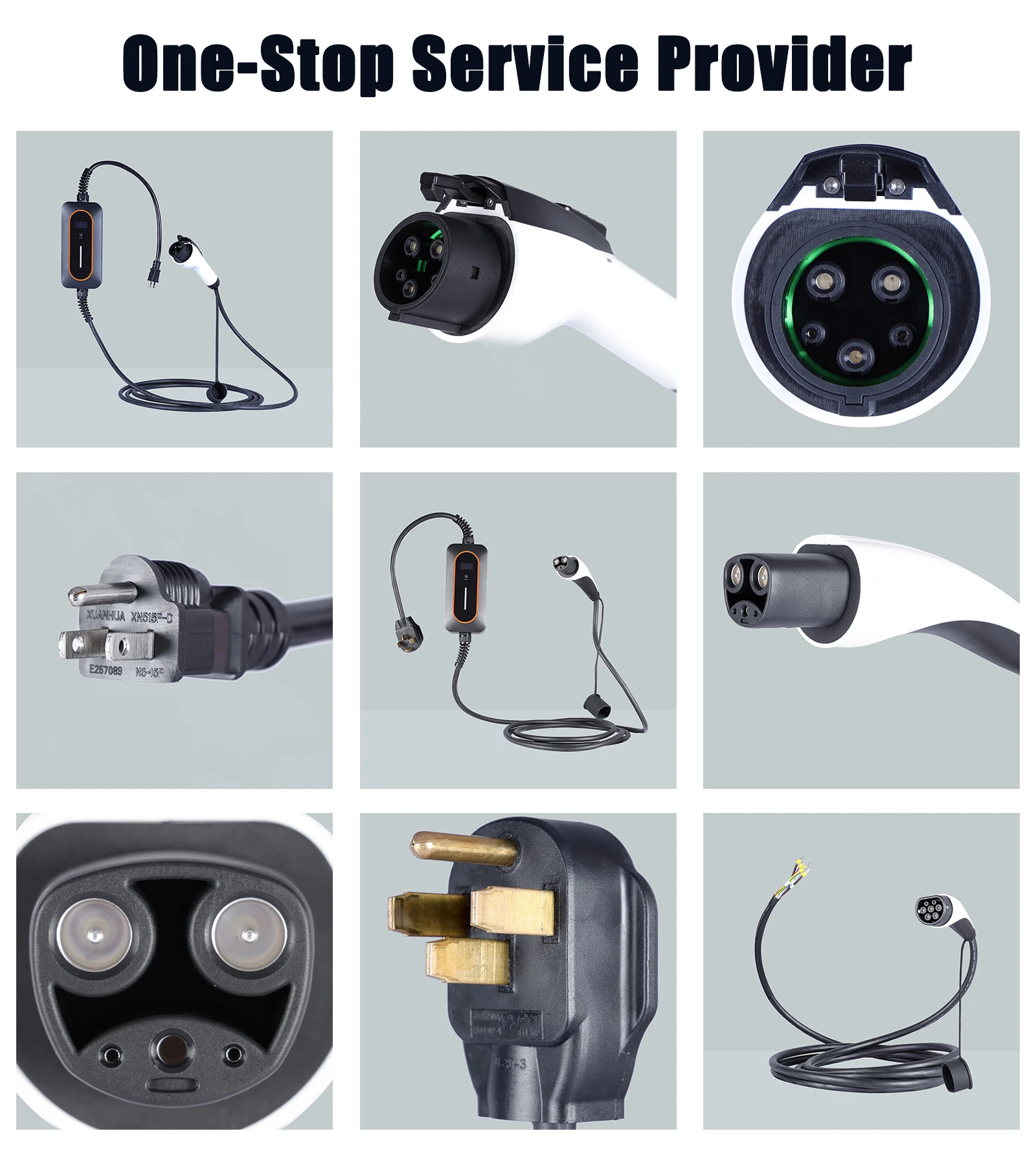
(1.) High-power charging technology
As the range anxiety of electric vehicles intensifies, high-power charging technology has become a research hotspot in the industry. Correspondingly, charging connectors must also be able to withstand higher currents and voltages. At present, some advanced charging connectors can already support charging of up to 350kW or even higher power. To achieve this goal, manufacturers have made a lot of innovations in material selection and structural design. For example, high-conductivity copper alloy materials are used, and the heat dissipation structure inside the connector is optimized to ensure effective heat dissipation during high-power charging and avoid safety problems caused by overheating.
(2.) Wireless charging technology
Wireless charging technology is regarded as one of the important development directions for future EV Charging Cables. It realizes wireless transmission of electrical energy through electromagnetic induction, magnetic resonance and other principles, making the charging process more convenient without plugging and unplugging connectors. Although wireless charging technology still faces problems such as low efficiency and high cost, major technology companies and automakers are actively investing in research and development. Some pilot projects have begun testing in specific areas. As the technology continues to mature, wireless charging connectors are expected to be commercialized and applied on a large scale in the future, bringing users a more convenient charging experience.
(3.) Intelligent technology
Intelligence is another important trend in the development of charging connectors. Future charging connectors will be equipped with various sensors and smart chips, which can monitor the current, voltage, temperature and other parameters in the charging process in real time, and transmit the data to the cloud or the user's mobile device through the Internet of Things technology. In this way, users can understand the charging status at any time and plan the charging time in advance. At the same time, the smart charging connector can also interact with the power grid to realize intelligent charging scheduling, optimize the power grid load, and improve energy utilization efficiency.
3. Safety Assurance: A Key Indicator That Should Not Be Underestimated
(1.) Electrical safety
https://www.apeksev.com/evproducts/ev-charging-adapters/type-2-to-tesla-adaptor.html involves high voltage and high current, so electrical safety is of vital importance. The charging connector must have good insulation performance to effectively prevent leakage accidents. At the same time, multiple safety mechanisms such as overcurrent protection, overvoltage protection, and short-circuit protection need to be set up to ensure that the circuit can be quickly cut off when abnormal conditions occur during the charging process to protect the safety of personnel and equipment. In addition, the plugging and unplugging process of the charging connector also needs to be designed reasonably to avoid arcing and reduce electrical safety hazards.
(2.) Mechanical safety
The charging connector needs to be frequently plugged and unplugged during use, so the reliability and durability of its mechanical structure are crucial. The connector shell should be made of high-strength, wear-resistant materials that can withstand certain external force impacts. The internal contacts need to have good elasticity and wear resistance to ensure that good electrical connections can be maintained after multiple plugging and unplugging. In addition, in order to prevent misplugging, the charging connector is usually designed with an anti-misplugging device to ensure that the connector can only be inserted into the charging port in the correct way.
(3.) Environmental adaptability
The use environment of electric vehicles is complex and diverse, and the charging connector needs to have good environmental adaptability. In harsh environments such as high temperature, low temperature, humidity, and dust, the charging connector must be able to work normally without affecting charging performance and safety. For example, in cold areas, the charging connector needs to have low-temperature resistance to prevent problems such as brittle materials and poor contact at low temperatures; in coastal areas, the charging connector needs to have good corrosion resistance to resist the erosion of salt spray.
4. Market Competition: A Fierce Battlefield of Many Players
(1.) Traditional auto parts suppliers
Traditional auto parts giants such as Bosch and Delphi have quickly entered the Type 2 To Tesla Adaptor connector market with their technology, brand and customer resources accumulated over many years in the automotive industry. They have strong R&D and production capabilities and are able to provide high-quality and diversified charging connector products. For example, the series of charging connectors launched by Bosch not only meet the high performance requirements of the market, but also have undergone rigorous testing in terms of reliability and safety, and are deeply trusted by automakers.
(2.) Electronic component manufacturers
Electronic component manufacturers represented by TE Connectivity and Molex have a deep technical background in electronic connection technology. They apply their advanced technologies in the electronics field to the R&D and production of electric vehicle charging connectors and have launched many innovative products. For example, TE Connectivity has used its technical advantages in miniaturized and high-performance connectors to develop a small-sized and high-performance charging connector that meets the needs of electric vehicles for compact design.
(3.) Emerging technology companies
With the rise of the electric vehicle market, some emerging technology companies have also entered the field of charging connectors. These companies usually have innovative thinking and flexible operating models, and can respond quickly to market demand. For example, some emerging companies focus on the research and development of wireless charging connectors. By cooperating with universities and research institutions, they have achieved a series of technological breakthroughs and are expected to occupy a place in the future wireless charging market.
5. Standards Competition: An Urgent Need for Unified Standards
(1.) Differences in international standards
At present, the global standards for Mode 2 EV Charger connectors have not been fully unified. Different countries and regions have adopted different standard systems, such as the SAE J1772 standard in the United States, the Mennekes standard in Europe, and the GB/T standard in China. These standards have certain differences in interface size, electrical performance, communication protocol, etc., which has brought inconvenience to the cross-border use of electric vehicles and the global layout of charging infrastructure. For example, an electric vehicle designed according to European standards may not be able to directly use existing charging piles in China and needs to use adapters, which not only increases the user's cost of use, but also limits the market promotion of electric vehicles.
(2.) The importance of unified standards
A unified charging connector standard is crucial to the development of the electric vehicle industry. It can promote the interconnection and interoperability of electric vehicles and charging infrastructure, and improve the convenience and efficiency of charging. At the same time, unified standards help reduce production and R&D costs and improve market competition efficiency. Major automobile manufacturers and related industry organizations have realized the importance of unified standards and are actively promoting the unification of global charging connector standards. For example, the International Electrotechnical Commission (IEC) is working to coordinate the differences between national standards and develop a set of common international standards to promote the global development of the electric vehicle industry.
6. Development Bottlenecks: A Real Dilemma That Needs to Be Breakthrough
(1.) Cost pressure
Although the scale of the electric vehicle market is constantly expanding, the cost of charging connectors is still an important factor restricting its development. The R&D and production costs of high-power charging connectors and smart charging connectors are relatively high, which makes their prices high. For automakers, the increase in costs will affect the market competitiveness of their products; for consumers, the higher price of charging equipment will increase their car purchase and use costs. Therefore, how to reduce the cost of charging connectors while ensuring their performance and quality is an important challenge facing the industry.
(2.) Compatibility issues
In addition to the compatibility issues caused by differences in international standards, there may also be compatibility issues between electric vehicles and charging equipment of different brands and models. Due to the lack of unified technical specifications and testing standards, some charging connectors may have problems such as unstable charging and failure to charge when connected to specific electric vehicles or charging piles. This not only brings trouble to users, but also affects the market image and user acceptance of electric vehicles. Solving compatibility issues requires strengthening communication and cooperation within the industry, formulating unified technical standards and testing specifications, and strengthening compatibility testing of products.
7. Future Outlook: Leading a New Journey of Electric Mobility
(1.) Accelerate industry integration
With the continuous development of electric vehicle technology, charging connectors will accelerate integration with battery technology, charging infrastructure technology, etc. For example, the design of charging connectors will be more closely integrated with the charging characteristics of the battery to achieve more efficient and intelligent charging management. At the same time, charging connectors will also be deeply integrated with the intelligent control system of the charging pile to realize the automation and intelligence of the charging process. This industry integration will promote the coordinated development of the entire electric vehicle industry chain and improve the overall competitiveness of the industry.
(2.) Expand application scenarios
In addition to the traditional EV Charging Plug field, charging connectors will also expand application scenarios in other fields. For example, in emerging fields such as electric ships and electric aircraft, charging connectors will also play an important role. With the development of technology and the growth of market demand in these fields, charging connectors will usher in new development opportunities. In addition, charging connectors can also be used in distributed energy storage systems to achieve flexible transmission and distribution of electric energy.
(3.) Promote sustainable development
Against the backdrop of global sustainable development, the charging connector industry will also develop in a more environmentally friendly and sustainable direction. Manufacturers will pay more attention to the selection of materials and the optimization of production processes to reduce the impact on the environment. For example, recyclable materials are used to manufacture charging connectors, green manufacturing processes are promoted, and energy consumption and pollutant emissions are reduced during the production process. At the same time, with the popularization of electric vehicles, the large-scale production and use of charging connectors will also promote the recycling of resources and promote the sustainable development of the entire industry.