I. Why are power sockets not suitable for charging electric cars?
Risks of overheating and overvoltage
Slow charging times and energy loss
II. Use should remain an exception
III. Which home charging solution should you choose?
Heavy-duty sockets: the safer choice?
Home charging points: the best solution
IV. Other charging solutions
Charging at a public charging station?
Charging at work?
V. Conclusion

I. Why are power sockets not suitable for charging electric cars?
Before you plug your electric car into a domestic socket, you must understand why this solution is not ideal. It's not just a question of power, but also of safety and efficiency!
Risks of overheating and overvoltage
Domestic sockets are designed for standard household appliances and cannot handle the heavy loads required for charging an electric car. Using such a socket may cause the circuit to overheat and, in the worst case, cause a fire. Electrical safety is essential and overloading can have serious consequences. In the UK, standard sockets are typically rated for 13 amps, which may not be enough to charge an electric car battery for a long time.
Slow charging times and energy loss
Apart from the risk of overheating, slow charging is another major disadvantage. Charging an electric car with a household socket can take a long time. For an average-sized battery, a full charge can take more than 24 hours! What's more, this method is inefficient in terms of energy consumption, as some of it is lost as heat! A study in the UK showed that charging with a household socket can be 30% less efficient than using a dedicated charging point. This means you need to consume more electricity to get the same amount of energy. So, unless you want to spend a whole weekend waiting for your car to charge, you'd better choose a more efficient solution!
II. Use should remain an exception
Given the above risks, we recommend that you do not use a household socket to charge your vehicle regularly. This is a stopgap measure that should only be used in emergencies and for short periods of time. Experts recommend using a household socket only for occasional low-power charging. For example, you can use it when taking a short trip or charging a plug-in hybrid car that consumes less energy.
Despite these limitations, fortunately, there are more suitable charging solutions for electric car owners.
III. Which home charging solution should you choose?
For those looking to charge their electric car at home, here are some safer and more efficient options than a standard household socket.
Heavy-duty sockets: a safer option?
Heavy-duty sockets are specifically designed to handle higher loads than a standard household socket. This makes charging safer. They are ideal for electric and plug-in hybrid vehicles and typically offer up to 3.7kW of charging power, which is about three times that of a standard socket. Heavy-duty sockets, such as Green'Up sockets, are ideal for this purpose. They reduce the risk of overheating and overvoltage. However, even with a heavy-duty socket, charging speeds are still limited, taking several hours to fully charge.
Home charging point: the best solution
For efficient and safe charging, the best option is to install a home charging point. This can significantly reduce charging time and optimize energy efficiency. Charging points offer power ratings ranging from 3.7kW to 22kW. This means you can get a full charge in just a few hours. Costs can vary depending on the power rating of the charging station and the installation fee, ranging from a few hundred euros to several thousand euros. However, for those looking for a practical, long-term solution, the investment is well worth it. It's a bit like switching from a bicycle to an electric scooter, with a significant increase in speed and comfort!
Want to learn about the different options for home charging points? The APEKS website offers a variety of high-quality models, including:
Car Charger With Two Outlets, perfect for fast and safe home charging.
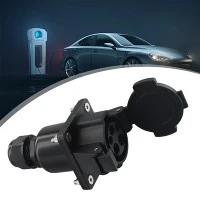
Sae J1772 Socket Mobile Charging Station, perfect for those looking for a flexible, portable solution.
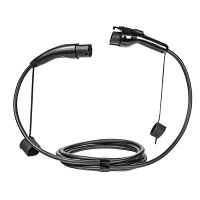
The Type 2 Wall Socket is a full-featured smart charging station with dynamic energy management. It maximizes charging speed to save costs, especially by only activating charging during off-peak hours or using solar power.
The options cover a variety of needs, from fixed charging to mobile solutions, suitable for all situations. Explore the full range of APEKS charging stations.
IV,other charging solutions
Charging solutions are not limited to the options available at home. Here are some alternatives to charging your electric car outside.
Charging at a public charging station?
Public charging stations are a convenient option for many drivers. They usually offer fast charging and are increasingly common in urban areas and on main roads. Some public charging stations can even provide ultra-fast charging up to 150kW. This means that the battery can be charged to 80% in less than 30 minutes. However, it is important to choose a charging station carefully to avoid unpleasant surprises such as high prices and long queues.
Charging at work?
More and more companies are installing charging stations for their employees. This trend is driven by preferential policies and private investment to meet the growing demand for electric vehicles. For users on their way to work, this is simply a godsend! So when you are not working remotely, you can take advantage of practical electric vehicle charging solutions during the day. This move allows employees to enjoy the convenience of easy charging, especially those who cannot install charging stations at home.
V. Conclusion
In short, using a home socket to charge an electric vehicle is a stopgap measure and should be avoided as much as possible. The safety risks and inefficiency of this method make home charging points or other public and professional options more attractive. Investing in charging points is a smart choice for safety and convenience, as it guarantees a faster and safer charging experience.