What Are EV Charger Types?
As the world accelerates its transition to sustainable energy, the demand for electric vehicles (EVs) continues to rise, and with it, the need for a reliable, accessible, and efficient charging infrastructure. Charging an EV might seem as simple as plugging it into a wall socket, but in reality, there are various types of EV chargers designed to meet different needs, depending on the speed of charging, location, and the type of electric vehicle in question.
Understanding the different types of EV chargers is essential for consumers, businesses, and policymakers to ensure the proper setup and widespread adoption of electric vehicles. This article will break down the various EV charger types, including Type 1, Type 2, and DC fast chargers, and discuss their pros, cons, and the technological advancements shaping the future of EV charging.
Level 1 Chargers: The Basics of Home Charging
Type 1 chargers refer to the most basic form of EV charging, utilizing a standard 120-volt AC outlet, typically found in homes across North America and many other parts of the world. This charger type is the most accessible, as it doesn't require any additional installation or special equipment beyond the charging cable that comes with most EVs.
Pros:
Easy to Use: Since most households already have 120-volt outlets, no special equipment or installation is required, making it the easiest option for home charging.
Low Cost: Type 1 chargers are essentially just a standard outlet, meaning there are no additional costs for installation, making it an affordable entry point for EV owners.

Level 2 Chargers: Faster and More Efficient
Type 2 chargers offer a significant improvement in charging speed over Type 1, providing a 240-volt AC power supply. This type of charger is commonly found in public charging stations, workplace environments, and as a more advanced option for home installations. To install a Type 2 charger at home, a dedicated circuit and professional installation are required, but the benefits of faster charging are well worth the investment for many EV owners.
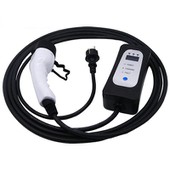
For Type 2 electric car charger cables, a robust connection is needed to handle the higher voltage and ensure a safe and fast charging experience. These cables are designed to work specifically with Type 2 chargers, offering the necessary power transfer for an efficient charge.
Pros:
Faster Charging: Type 2 chargers provide a much faster charging rate, typically between 15 to 30 miles of range per hour, depending on the vehicle and charger specifications. This means an EV can be charged overnight, making it a great option for home use.
Widely Available: Type 2 chargers are commonly installed in public spaces, workplaces, and even shopping malls, providing greater flexibility for drivers who need to charge while away from home.
Commercial Use: Many businesses are opting to install Type 2 chargers for employees or customers, providing a boost to the overall EV infrastructure.

DC Fast Chargers: The Rapid Charging Solution
For drivers who need quick turnaround times, DC fast chargers, also known as Level 3 chargers, are the answer. These chargers provide direct current (DC) power rather than alternating current (AC), allowing for much faster charging speeds. DC fast chargers are typically found in public charging stations along highways or at commercial locations where drivers need to quickly recharge their vehicles during long-distance travel.
Pros:
Extremely Fast Charging: DC fast chargers are capable of adding 60-100 miles of range in just 20-30 minutes, making them the go-to solution for long-distance EV travel. Some advanced DC fast chargers can charge an EV battery from 0 to 80% in just 30 minutes.
Ideal for Public Charging Networks: Given their speed, DC fast chargers are ideal for public charging networks, providing a rapid solution for drivers on the go.
Wireless Charging: The Future of EV Charging?
One of the most exciting advancements in EV charging technology is wireless or inductive charging. This technology eliminates the need for physical connectors by using electromagnetic fields to transfer power to the vehicle's battery. Although still in the early stages of development, wireless charging has the potential to revolutionize how we think about charging infrastructure, especially in public spaces, where it could allow for "hands-free" charging.
Pros:
Convenience: Drivers simply park their EV over a charging pad, and the vehicle charges automatically. This eliminates the need to physically plug in cables, which is especially convenient in public charging stations or for home use.
Sleek and Modern: Wireless charging would provide a more seamless, aesthetically pleasing charging experience, particularly in urban areas where cable management and visual clutter can be an issue.
EV Charging Cable Type 1 to Type 2: Ensuring Compatibility
When it comes to connecting Type 1 or Type 2 chargers to vehicles, the right charging cable is crucial. For instance, EV charging cable Type 1 to Type 2 is one of the most commonly used cables for vehicles that require a Type 1 connector on one end and a Type 2 connector on the other. This cable is essential for ensuring compatibility between different types of chargers and vehicles, as Type 1 and Type 2 connectors are not interchangeable without the proper cable.
These cables support the safe and efficient transmission of power, making them an important aspect of the EV charging infrastructure. The quality and durability of Type 2 electric car charger cables are also critical for preventing overheating and ensuring optimal charging speeds.