In 2025, when the electric vehicle industry is booming, the performance and quality of charging piles are crucial to the user's charging experience and the development of the entire industry. Recently, after rigorous testing, we revealed the best electric vehicle charging piles in 2025 for you.
Table of contents
1. Test background and purpose
1. Test background and purpose
As the number of electric vehicles continues to rise, many brands and models of charging piles have emerged on the market, with varying quality and performance. In order to help consumers choose the most suitable charging pile, this test covers multiple brands and types of charging piles, and evaluates them from multiple dimensions such as charging speed, safety, compatibility, and intelligence, aiming to provide consumers with authoritative and professional references.
1. Fast charging piles perform well: In the test, some brands of DC fast charging piles showed amazing charging speeds. For example, the MaxiCharger DC series of Daotong Technology has a maximum output power of up to 480kW per gun, which can achieve a charging efficiency of "one kilometer per second", greatly shortening the user's charging waiting time.
2. Slow charging piles are stable and reliable: For AC slow charging piles, some brands such as Anker Innovations optimize charging technology and circuit design to maximize charging efficiency while ensuring safety. Its 7kW slow charging pile can provide stable charging support for electric vehicles at night to meet daily commuting needs.
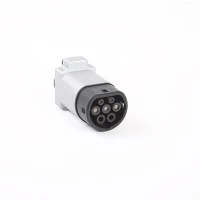
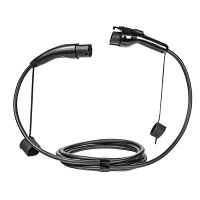
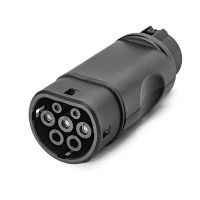
APEKS is a forward-looking enterprise actively involved in the research, development, manufacturing and sales of EV charging products, especially EV connectors, portable EV chargers and EV cables. Its products have obtained multiple certifications, including ISO9001:2015 and IATF16949:2016 quality management system certifications, as well as important testing and certification marks such as TUV, CE, UKCA, UL and CQC.
EV Charging Cables connector production process

Design and Specification:
The process begins with detailed design and specification based on industry standards and customer requirements. This includes determining the type of connector (e.g. Type 1, Type 2, CCS), electrical specifications, and mechanical dimensions.

Material Procurement:
High-quality materials such as copper alloys for conductive elements, robust plastics for housing, and weather-resistant coatings are sourced from trusted suppliers. Each material is selected to ensure durability, electrical conductivity, and compatibility with environmental conditions.

Material Selection:
High-quality materials such as robust plastics, durable metals (e.g., stainless steel, aluminum), and conductive alloys are chosen to ensure longevity and reliability of the charging connector.

Metal Fabrication:
Conductive elements such as pins, sockets, and locking mechanisms are fabricated using CNC machining, die casting, or stamping methods. These processes ensure precise dimensions and optimal electrical conductivity.

Quality Control:
Throughout the production process, stringent quality control measures are implemented. This includes visual inspections, electrical testing to verify conductivity and insulation resistance, mechanical stress testing to assess durability, and environmental testing to evaluate performance under varying conditions (e.g., temperature, humidity).

Packaging and Distribution:
Once quality checks are completed and the charging connectors meet all specifications, they are carefully packaged to prevent damage during transportation. Products are then distributed to EV charging station manufacturers, automotive OEMs, and other customers worldwide
1. Multiple protection mechanisms: Safety is the primary consideration for charging piles. All major brands have equipped charging piles with multiple safety protection mechanisms, such as overvoltage protection, Mode 3 EV Charger, leakage protection, short circuit protection, etc. For example, MSI's EZgo portable charging pile uses high-quality electronic components and advanced protection circuits in the internal circuit design to ensure the safety of users and vehicles in various complex charging environments.
2. Fireproof and explosion-proof design: Some charging piles also have fireproof and explosion-proof functions. Their outer shells are made of flame-retardant materials, and the internal charging modules are also specially treated, which can effectively prevent fire and explosion accidents even in extreme cases.
1. Compatible with multiple models: An excellent charging pile needs to have good compatibility and be compatible with most electric vehicle brands and models on the market. In the test, it was found that most mainstream brands of charging piles can achieve good compatibility with common electric vehicles. For example, Tesla's super charging pile can not only quickly charge Tesla models, but also provide charging services for some models of other brands through the adapter interface.
2. Support different charging protocols: In addition to the compatibility of physical interfaces, the support of charging piles for different charging protocols is also crucial. For example, charging protocols such as national standards, European standards, and American standards, some universal charging piles can support multiple charging protocols through software upgrades and hardware optimizations to meet the charging needs of vehicles in different regions and brands.
1. Intelligent charging management: With the development of intelligent technology, more and more charging piles have intelligent charging management functions. For example, through the mobile phone APP, you can make remote charging reservations, monitor the charging status in real time, and view charging history records. Daotong Technology's intelligent cloud platform can also provide intelligent operation, intelligent operation and maintenance, and intelligent payment services for charging station customers to achieve intelligent management.
2. Intelligent power allocation: When multiple vehicles are charging at the same time, some charging piles can intelligently allocate charging power according to the battery status and charging needs of the vehicles, improve the utilization rate and charging efficiency of charging equipment, and reduce the waiting time of users.
●Compatibility Issues
Vehicle - Charger Incompatibility
One of the most prevalent problems is the mismatch between electric vehicles (EVs) and chargers. Different EV Charging Cables are equipped with various charging interfaces and protocols. For example, while Tesla has its own North American Charging Standard (NACS), many other vehicles follow the SAE J1772 standard in the United States. If a user with a non - Tesla vehicle tries to use a Tesla - only charger without an appropriate adapter, it simply won't work. Even when using adapters, there can be issues related to power transfer efficiency and communication between the vehicle and the charger.
Charger - Grid Compatibility
EV chargers need to be compatible with the local electrical grid. In some areas, especially older neighborhoods or regions with limited grid capacity, chargers may not function properly. High - power DC fast chargers, in particular, require a significant amount of electrical power. If the grid in a particular location cannot supply the necessary amperage or voltage, the charger may trip breakers, experience power fluctuations, or not operate at its full capacity. This can lead to longer charging times or even damage to the charger.
●Slow Charging Speeds
Charger - Side Limitations
The charging speed of an EV charger can be limited by its design and components. Some lower - quality chargers may not be able to deliver the maximum power they are rated for. For example, a charger rated at 7kW might only be able to supply 5kW in actual use due to internal resistance in its wiring or inefficient power conversion components. Additionally, if the charger's cooling system is not effective, it may throttle the charging power to prevent overheating, further reducing the charging speed.
Vehicle - Side Constraints
EVs themselves can also be a factor in slow charging. The vehicle's on - board charging system may not be able to accept the full power output of the charger. Older EV models, in particular, may have limitations in their charging hardware. For instance, a vehicle with a maximum charging capacity of 3.7kW will not be able to charge any faster, even if connected to a 7kW charger. Moreover, as the battery ages, its ability to accept a high - speed charge may decline, leading to longer charging times.
●Faulty Connectivity
Physical Connection Problems
The connection between the charger and the vehicle is crucial. Loose or damaged charging cables and connectors are common culprits. Over time, the cable may be bent, twisted, or pinched, causing internal wires to break or fray. A damaged connector may not make proper contact with the vehicle's charging port, leading to intermittent charging or no charging at all. In addition, moisture or dirt entering the connector can cause corrosion and electrical short - circuits.
●Wireless Connectivity Glitches
Many modern EV chargers come with wireless connectivity features, such as Wi - Fi or Bluetooth, for remote monitoring and control. However, these wireless connections can be unreliable. Interference from other electronic devices, poor Wi - Fi signal strength, or software glitches in the charger's firmware can cause the connection to drop. This can prevent users from accessing important features like remote start/stop of charging, real - time monitoring of charging status, and scheduling charging sessions.
Electric vehicle chargers are vital for promoting EV adoption, yet issues like compatibility glitches and high installation and maintenance costs impede user experience. Solving these requires collective efforts from the industry. Manufacturers must boost R&D, enhance charging speed and product quality, and ensure compatibility with various vehicles and grids. They should also fortify safety features like overcurrent and leakage protection. Tech developers need to fix wireless connection instability and improve the reliability and usability of smart features. Power companies and relevant departments can roll out preferential policies to cut installation costs and set up an effective after-sales maintenance system. Looking ahead, with technological progress and industry development, we anticipate these problems will be steadily addressed. EV chargers will then become more efficient, safer, and smarter, firmly supporting EV prevalence and driving global transportation towards a green and sustainable future.