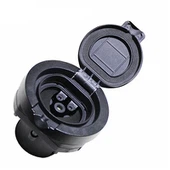
Home EV charging
If you're an electric car owner and you want to charge at home, here's what you need to know.
1. Electric car charging levels:
Level 1: Charging with 120 volts AC (i.e. a standard household outlet) with an output of about 1 kilowatt. Charging takes several days.
Level 2: Charging with 240 volts AC, with an output generally between 6 and 19 kilowatts. Can charge an electric car with a medium-sized battery overnight.
Level 3/DC fast charger: Charging with 400 or 800 volts DC, with an output of 50 to 350 kilowatts. It takes only half an hour to charge an electric car's battery from 10% to 90%. Many public chargers are of this type, but they're not suitable for home use due to their high cost.
Output:
This is the charging power sent to your electric car, measured in kilowatts. (Circuit voltage multiplied by the number of amperes flowing through it equals watts of power; 1,000 watts equals 1 kilowatt. For example, a 240-volt outlet drawing 32 amps of current outputs 7.7 kilowatts of power.)
2. Connector Type:
The connector is what you need to connect your charging device to your electric vehicle. For home chargers like the ones on this list, there are two main types to look out for: J1772 and Tesla's North American Charging Standard (NACS or J3400). Thankfully, adapters for switching between connector types are widely available, so there's no need to limit your purchase to whatever connection your vehicle has.
3. Installation Cost:
The cost really depends on whether you have enough backup power capacity. If you do, you might be able to lay a new line for just a few hundred dollars. If not, increasing the capacity of your home's electrical system could cost thousands of dollars.
4. FAQ
Q: What are the different types of electric vehicle chargers?
There are three main types of electric vehicle chargers:
A: Level 1 chargers: Use a standard household outlet (120V) and charge more slowly, making them suitable for overnight charging or daily short trips.
Level 2 charger: requires a dedicated circuit (240V), charges faster, suitable for home and public installation.
Level 3 charger (DC fast charging): uses high-voltage DC, charges fastest, usually used in commercial charging stations, suitable for quick recharging during long-distance travel.
Q: Are all home electric vehicle chargers the same?
No. There are two main types of home chargers: Level 1 and Level 2:
Level 1 charger: comes with the car, uses a regular socket, and charges slowly.
Level 2 charger: requires additional purchase and installation, charges faster, suitable for daily use.
Q: What is the difference between Level 1, Level 2, and Level 3 charging?
A: Level 1 charging: 120V, slowest charging, suitable for nighttime or short-distance use.
Level 2 charging: 240V, fast charging, suitable for home and public places.
Level 3 charging (DC fast charging): high-voltage DC, fastest charging, suitable for commercial charging stations and long-distance travel.
Q: Can electric vehicle owners who purchase home chargers enjoy tax breaks?
A: Yes, many countries and regions provide tax breaks or subsidies for car owners who purchase and install home chargers. Specific policies vary from region to region. It is recommended to consult local relevant departments.
Do I need to buy electric vehicle charging equipment?
It depends on the situation:
Level 1 charger: comes with the car, suitable for car owners with low charging needs.
Level 2 charger: If you need faster charging, it is recommended to purchase and install it, especially for car owners who use it frequently on a daily basis.