

In the popularity of electric vehicles, home chargers have become the focus of many owners. As a professional manufacturer of electric vehicle charging equipment, APEKS occupies an important position in the industry with advanced technology and strict quality control. There are significant differences in the performance and use conditions of different levels of home chargers, which directly affect the charging experience and use costs of owners. In-depth understanding of the differences between various levels of home chargers can help owners make more appropriate choices according to their own needs. Next, let's take a closer look at APEKS Level 1, Level 2 and Level 3 home chargers.

1. Charging speed: speed is different, each takes what he needs
1.1Level 1 Charger
APEKS's Level 1 charger is the slowest to charge, using a standard 120V home outlet that adds roughly 2-5 miles of range per hour to the vehicle. For an electric car with a range of around 200 miles, a full charge with APEKS Level 1 charger can take 8-10 hours or more. This may be a viable option for those who drive fewer miles per day and have plenty of night parking time. For example, the vehicle is only used for short daily commutes, or for occasional use, and the use of night breaks to charge can meet demand to a certain extent. However, for users who often need to travel long distances or are more sensitive to charging time, such charging speed is obviously difficult to meet the demand.
1.2Level 2 Charger
APEKS Level 2 charger has significantly improved charging speed, generally using 240V power supply. Under these conditions, the vehicle can supplement its range by 10-60 miles per hour, depending on factors such as charger power and vehicle battery efficiency. Also taking a 200-mile range as an example, a full charge with the APEKS Level 2 charger should only take 3-6 hours. This allows it to meet the daily usage needs of most home users, whether it is a longer commute, or a short trip on the weekend, to replenish the vehicle with enough charge in a relatively short time.
1.3Level 3 Charger
Although APEKS focuses on the research and development and production of charging equipment, the current Level 3 charger is also known as DC fast charge. Due to its ultra-high power demand, it is mainly used in commercial fast charge stations, not at home. Under ideal conditions, some models can charge the battery from 0 to 80% in 30 minutes using the Level 3 charger. This speed advantage makes it the best choice for quickly replenishing power during long-distance driving, such as the fast charging station in the service area of the highway, where the owner can use a short rest time to quickly charge the vehicle, greatly reducing the waiting time for charging and improving travel efficiency.
2. Power size: determines the speed and affects the installation
2.1Level 1 Charger
APEKS's Level 1 chargers are lower in power, typically between 1.4-1.9 kW. Such low power allows it to be directly connected to ordinary household sockets, without complex modifications to the home circuit, and will not cause a large load impact on the home grid. This is one of its big advantages, for some old communities or the circuit facilities are not perfect for the family, using APEKS Level 1 charger is a simple and convenient choice.
2.2Level 2 Charger
APEKS Level 2 charger power is significantly higher, common power is 3.3kW, 6.6kW, 7kW, and even some products up to 22kW. High power brings faster charging speed, but at the same time, it also puts higher requirements on the use conditions. Due to the large power, it needs to be equipped with a special circuit and socket, generally 240V. When installing APEKS Level 2 chargers, professional electricians are often required to evaluate and transform the wiring and meter capacity of the home circuit to ensure that the power needs of the charger can be met and a safe and stable charging environment can be ensured.
2.3Level 3 Charger
APEKS recognizes that the Level 3 charger power is very high, generally above 50kW, and some ultrafast charging devices can even reach 150kW-350kW. Such high power makes it impossible to use in a domestic environment, because the electricity supply of the average household simply cannot meet its needs. It is mainly used in commercial fast charging stations, which need to be equipped with specialized high-power power supply facilities to support the normal operation of Level 3 chargers.
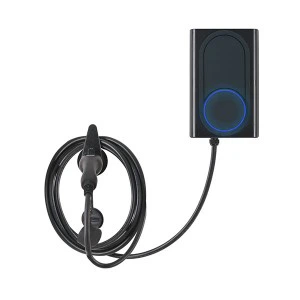
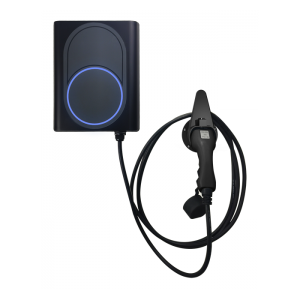
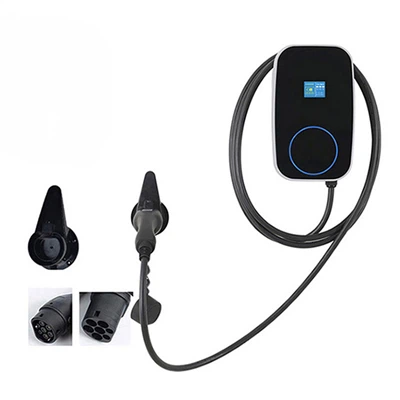

3. Power requirements: each has standards, suitable for different environments
3.1Level 1 Charger
The Level 1 charger from APEKS has the simplest power requirements, using a standard 120V household outlet. This outlet is widely available in the home and does not require additional power modifications, which makes the use of Level 1 chargers very convenient and suitable for almost all home environments. However, its lower voltage also limits the charging speed.
3.2Level 2 Charger
APEKS Level 2 chargers require 240V power and dedicated circuits and sockets. This means that at the time of installation, it is not only necessary to replace the socket that meets the requirements, but also to re-lay the specialized circuit to ensure that it can withstand the high power of the charger. In some old communities or areas with limited power supply, it may also be necessary to expand the meter to meet the conditions of use of Level 2 chargers. This series of installation requirements makes the installation of Level 2 chargers relatively complex and requires professional operations.
3.3Level 3 Charger
APEKS understands that Level 3 chargers require specialized high-power power supply facilities due to their ultra-high power requirements. This facility cannot be equipped in the home, and can only be seen in commercial fast charging stations. Commercial fast charging stations will carry out special power planning and equipment installation according to the power needs of Level 3 chargers to ensure that the chargers can operate normally and provide fast charging services for electric vehicles.
4. Equipment cost and installation difficulty: the cost is different, the installation complexity is different
4.1Level 1 Charger
APEKS Level 1 charger device is the lowest cost, its structure is relatively simple, and the purchase price is relatively affordable. Moreover, its installation is also very simple, does not require professional installation skills, the owner only needs to plug the charger directly into the ordinary household socket can be used, almost no installation cost. This makes the Level 1 charger the first choice for some car owners with limited budgets and low charging speed requirements.
4.2Level 2 Charger
APEKS Level 2 charger devices are relatively costly, and their prices will vary depending on power and features. In general, the higher the power and richer the features of the Level 2 charger, the more expensive the price. In terms of installation, due to the need for professional electricians to operate, including the installation of special circuits, sockets, etc., it may also be necessary to expand the household meter, which makes the installation cost increase correspondingly. Combining equipment cost and installation cost, the overall investment of using APEKS Level 2 charger is relatively large.
4.3Level 3 Charger
APEKS understands that Level 3 chargers are extremely costly due to their complex technical requirements and high power design. Moreover, the construction and operation of commercial fast charging stations require a large amount of capital investment, including the cost of site leasing, equipment procurement, and power capacity increase. These high costs determine that the Level 3 charger can not become a common charging device in the home, but is mainly used in the commercial field, to provide services for users with fast charging needs.


5. Application scenario: Select based on requirements
5.1Level 1 Charger
APEKS Level 1 chargers are suitable for those whose vehicle has a short daily mileage and a good amount of charging time. For example, the vehicle is mainly used for short-distance daily travel, the daily mileage is within dozens of miles, and the night parking time is longer, the owner can use the trough price period at night to charge. In this case, although the Level 1 charger is slow to charge, it is enough to meet the daily use needs of the vehicle, and it can also save charging costs.
5.2Level 2 Charger
APEKS Level 2 chargers are suitable for most home users, especially those who drive a lot of miles per day and need to be charged in a short time. For example, if the owner has a long daily commute or often takes short road trips on weekends, the Level 2 charger will be able to replenish the vehicle with enough charge in a few hours to meet the needs of daily use and occasional trips. At the same time, for some users who have certain requirements for charging speed and family power conditions, the Level 2 charger is also a good choice.
5.3Level 3 Charger
APEKS makes it clear that Level 3 chargers are mainly suitable for commercial fast charging scenarios, such as highway service areas, urban fast charging stations, etc. When electric vehicles need to travel long distances, the Level 3 fast charging stations set up in these places can quickly replenish the vehicle's electricity, greatly reducing the charging waiting time and improving travel efficiency. It is an important guarantee for solving charging anxiety during long-distance driving, but because it cannot be used in a home environment, it is not suitable for daily home charging.
To sum up, APEKS Level 1, Level 2 and Level 3 home chargers have obvious differences in charging speed, power, power requirements, equipment cost and installation difficulty, and application scenarios. When choosing a home charger, owners should consider their own vehicle use, charging needs, family power conditions and budget and other factors to choose the most suitable for their own charger. In this way, you can enjoy the convenient mobility brought by electric vehicles while ensuring that the charging process is efficient, safe and economical.


