Introduction: This article introduces different types of cables and plugs, and focuses on the standards and developments in various countries. There are four main types of electric vehicle charging cables. Most home electric vehicle dedicated charging stations and plug chargers use Mode 3 charging cables, while fast charging stations use Mode 4.
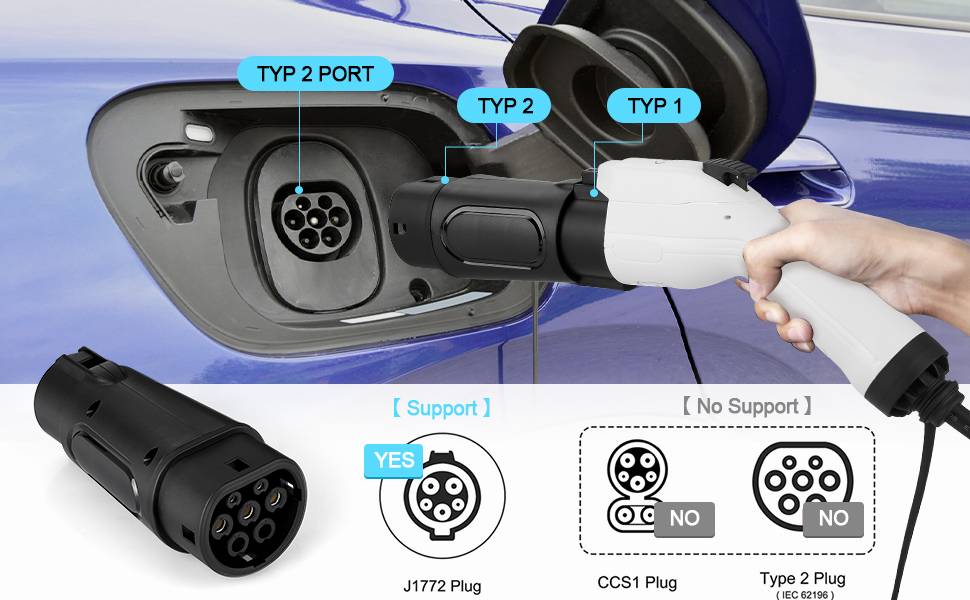
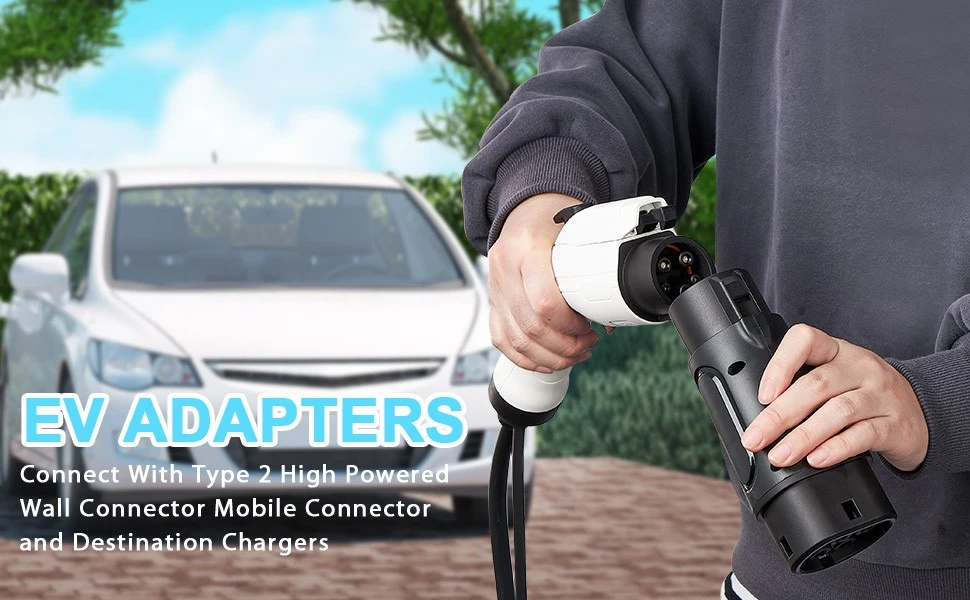
Electric vehicle charging plugs vary by manufacturer and your country, but there are a few mainstream standards around the world, each of which is suitable for a specific region. North America uses Type 1 plugs for AC charging and CCS1 for DC fast charging; while Europe uses Type 2 connectors for AC charging and CCS2 for DC fast charging.
Tesla cars have always been an exception. While they have adapted their designs to suit standards in other continents, in the United States they use their own proprietary plug, which the company now calls the "North American Charging Standard (NACS)". Recently, they shared this design with the world and invited other car and charging equipment manufacturers to incorporate this connector type into their designs.
Ⅰ. EV Charging Cables
What are EV Charging Cables?
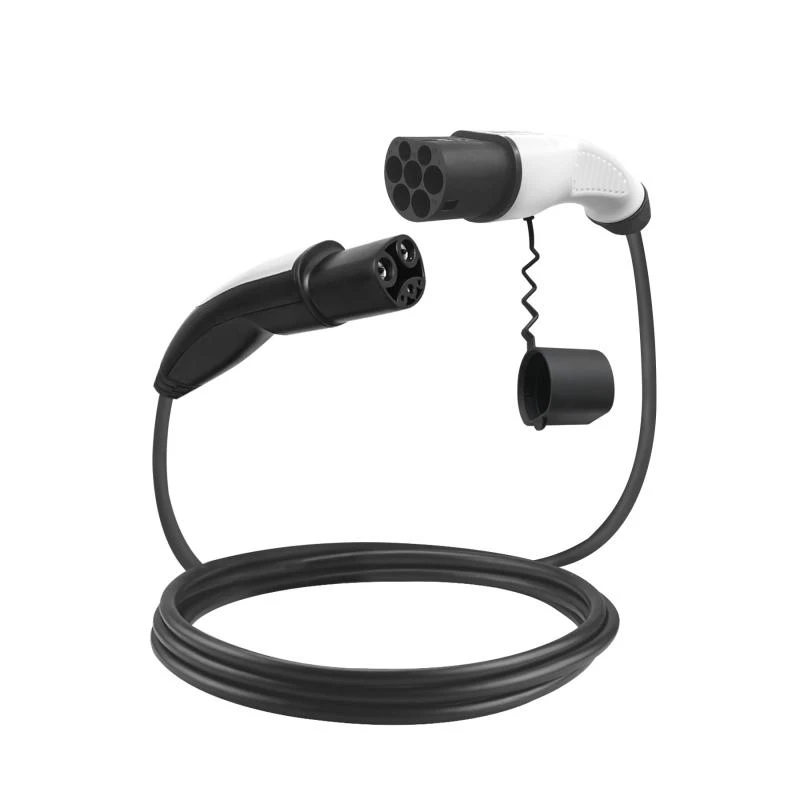
EV charging cables are designed to safely transfer power from a power source to your electric vehicle. Some charging stations come with their own charging cables (called wired charging stations), while others require you to bring your own. It's safe to say that charging cables are an essential part of EV charging.
Are all EV charging cables the same?
Not really. EV charging cables come in four forms or "modes," each designed for a specific type of charging. This can be a little confusing because the modes don't necessarily correlate to the "level" of charging. In this section, we aim to parse the differences between Mode 1, Mode 2, Mode 3, and Mode 4 charging cables, and determine which charging cables are best for which type of charging.
Types of EV charging cables
Mode 1 charging cables
With a Mode 1 charging cable, you simply connect a light EV (e-bikes, scooters, but not cars) to a standard AC outlet using an extension cord and a standard plug. Therefore, there is no communication between the vehicle and the charger, which means there are no special safety systems or protection against electric shock. This charging method is useful for light EVs such as e-bikes and scooters, but it is not safe for EVs and is banned in many parts of the world.
Ⅱ. EV charging plug
The EV charging plug is a key component that connects the vehicle to the charging device, and its design directly affects the charging efficiency and compatibility. According to the charging method, it can be divided into two categories: AC plug and DC fast charging plug. There are also proprietary standards for manufacturers such as Tesla. Mainstream plugs must meet international electrical safety specifications (such as IEC 62196) and pass tests such as waterproofing, dustproofing, and high temperature resistance. As the global market standardization process accelerates, the versatility and adaptability of plugs have become the focus of the industry. As a professional manufacturer, APEKS develops multi-protocol compatible plugs based on national standards. From material selection to structural design, long-term reliability is the core, providing one-stop solutions for car companies and charging operators.
Ⅲ. AC charging plug: the mainstream choice for home and public slow charging
AC charging plugs are mainly used for home charging piles and public slow charging scenarios, with a power range of 3.7kW to 22kW. The North American market generally adopts the Type 1 (SAE J1772) standard, which supports single-phase 240V power supply; Europe and Asia-Pacific regions are mainly based on Type 2 (Mennekes), and the three-phase design can achieve higher power output. Both plugs use AC power to power the on-board charger and need to match the charging control module on the vehicle side. APEKS's AC plug series adopts a modular contact design, supports custom locking mechanisms and temperature monitoring functions, ensures stable operation in complex environments such as humidity and high cold, and has passed global certifications such as UL and CE.
IV. DC fast charging plug: a technical benchmark for efficient energy replenishment
The DC fast charging plug directly transmits high-voltage DC power to the battery, with a power of 50kW-350kW, greatly shortening the charging time. The mainstream standards include CCS (Combined Charging System) and CHAdeMO: North American CCS1 integrates Type 1 AC interface, and European CCS2 is based on Type 2 expansion; while CHAdeMO is more common in Japanese models. This type of plug needs to carry more than 500A of current, and has extremely high requirements for heat dissipation and durability. APEKS's DC plug uses silver-plated copper alloy contacts and liquid cooling technology to effectively reduce contact resistance and temperature rise, with a plug-in life of more than 10,000 times, and is compatible with CCS/CHAdeMO dual protocols, and is compatible with multi-brand supercharging station equipment.
V. Tesla: A game-changer in proprietary standards
Tesla has broken the traditional pattern with NACS (North American Charging Standard). Its plug integrates AC/DC functions, is 40% smaller than CCS, and supports a maximum voltage of 1000V and a current of 500A. It has become the common choice of mainstream North American car companies. NACS's open strategy has accelerated its popularity in third-party charging networks. As an early NACS adapter, APEKS has developed a full range of liquid-cooled plugs and ultra-flexible cable assemblies, which use dynamic pressure balancing technology to avoid plug-in wear, and built-in chips to achieve precise communication with Tesla's BMS system, helping car companies quickly access Tesla's supercharging ecosystem.
VI. APEKS: Empowering the future of charging with professional manufacturing
As a world-leading cable and plug manufacturer, APEKS has been deeply involved in the electric vehicle field for more than ten years, and its products cover Type 1/Type 2, CCS, CHAdeMO and NACS standards. With "safety × compatibility × durability" as the core concept, we have built a full-link quality control system that runs through R&D, testing, and production, from high-purity conductor materials to military-grade injection molding processes. At present, APEKS has provided customized solutions for more than 30 car companies and charging operators, and has achieved extreme environment simulation tests from -40°C to 120°C through its own laboratory. In the future, we will continue to promote technological innovations such as high-power charging and wireless charging, and work with our partners to define a more efficient and reliable electric travel experience.