In the dynamic realm of electric vehicles (EVs), charger connectors serve as the critical interface for power transfer, shaping the user experience and infrastructure development. APEKS, a prominent player in the EV charging solutions landscape, has strategically aligned its offerings with diverse connector standards. This comprehensive exploration delves into the major types of EV charger connectors relevant to APEKS's portfolio, analyzing their technical nuances, real - world applications, and implications for the future of electric mobility.
Content
1. AC connector: the basis for slow to medium-speed charging
2. DC connector: facilitating public fast charging
3. Daotong's strategic considerations on connector compatibility
4. Practical application cases: making the connector "alive"
5. Future trends: the evolution of connectors and the role of Daotong
6. Meeting challenges: fragmentation and compatibility issues
7.The wider impact of Datong on electric vehicle adoption
1. AC Connectors: The Foundation of Slow - to - Moderate Charging
Alternating Current (AC) charging, relying on on - board vehicle chargers to convert power, is ubiquitous in residential and workplace settings. For APEKS's ecosystem, two AC connector types stand out, each catering to distinct user needs.
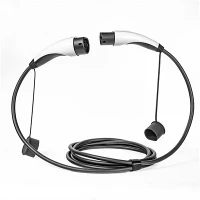
The Type 1 connector, standardized under SAE J1772, is prevalent in North America and Asian markets, particularly for Japanese - branded EVs. Characterized by its 5 - pin, single - phase design, it supports charging power ranging from 1.4 kW (120V, 15A) to a maximum of 7.4 kW (240V, 32A). APEKS's home charging stations, such as the APEKS MaxiCharger AC Home, are engineered to accommodate Type 1 connectors seamlessly. This allows owners of compatible vehicles (e.g., early - model Nissan Leaf, Mitsubishi i - MiEV) to conduct overnight charging with ease. The connector's simplicity and established presence in specific markets make it a reliable choice for slow - to - moderate charging scenarios, where extended charging durations (e.g., 8–12 hours for a full charge) align with typical residential usage patterns.
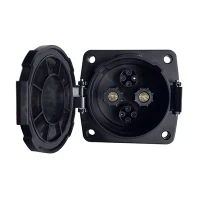
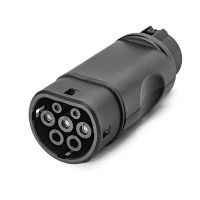
The Type 3 connector, adhering to the IEC 62196 standard, represents the three - phase AC charging solution. Available in variations like Type 3A (up to 43 kW, 400V, 63A) and Type 3C (supporting combined AC/DC charging in some implementations), it caters to users requiring faster AC charging. Our commercial charging solutions often integrate Type 3 compatibility, addressing the needs of businesses with EV fleets (e.g., delivery services, corporate vehicle pools). For instance, a fleet of electric vans utilizing Type 3 - enabled APEKS chargers can benefit from reduced charging times (e.g., 3–4 hours for a substantial charge) compared to single - phase alternatives, minimizing vehicle downtime and enhancing operational efficiency. In residential settings with three - phase power supply (common in parts of Europe), Type 3 connectors paired with APEKS hardware enable EV owners to access faster home charging, bridging the gap between standard AC and rapid DC charging.


2. DC Connectors: Enabling Rapid Public Charging
Direct Current (DC) charging bypasses the vehicle's on - board charger, delivering high - power energy directly to the battery. This technology underpins public fast - charging networks, and we has embedded support for key DC connector types to serve long - distance EV travelers and time - sensitive users.
Originating from Japan (developed by a consortium including automakers like Nissan and Mitsubishi), the CHAdeMO (CHArge de MOve) connector has been a pioneer in DC fast charging. It supports power levels from 50 kW to 100 kW (and beyond with advancements), enabling rapid charging for compatible vehicles. APEKS's DC fast chargers, such as the MaxiCharger DC Fast, often include CHAdeMO compatibility, catering to Japanese EV models (e.g., Nissan Leaf with CHAdeMO, Mitsubishi Outlander PHEV). In real - world scenarios, a CHAdeMO - enabled charger can add approximately 100–200 km of range in 30 minutes, making it a viable option for highway rest stops and urban fast - charging hubs. While newer standards have gained traction, CHAdeMO remains relevant in regions with established Japanese EV markets, and our continued support ensures backward compatibility for existing users.
The Combined Charging System (CCS) has emerged as a global leader in DC fast charging, unifying AC and DC charging capabilities within a single connector. There are two main variants: CCS1 (North America, based on SAE J1772 + two DC pins) and CCS2 (Europe, Asia, built on IEC 62196 - 2 + two DC pins).APEKS's CCS - compatible chargers, such as the high - power APEKS MaxiCharger DC Ultra, can deliver power up to 350 kW, enabling ultra - rapid charging. For example, a CCS2 - enabled EV like the Tesla Model 3 (via adapter in some regions) or Volkswagen ID.4 can add 200–300 km of range in just 15–20 minutes at a 350 kW CCS station. The widespread adoption of CCS by automakers (including European, American, and many Chinese brands) has made it a de facto standard for public fast charging. APEKS's investment in CCS technology ensures alignment with global infrastructure trends, facilitating cross - brand compatibility and reducing range anxiety for EV users.
3. APEKS's Strategic Approach to Connector Compatibility
APEKS's commitment to supporting multiple connector types stems from a deep understanding of the EV market's diversity. By offering chargers that accommodate Type 1/3 (AC) and CHAdeMO/CCS (DC), we targets two key user segments:
- Residential and Light - Commercial Users: Homeowners with varied EV makes (e.g., Japanese, European) can rely on our AC chargers to meet daily charging needs, regardless of connector type. Small businesses with mixed fleets (e.g., a mix of Type 1 - and Type 3 - compatible vehicles) benefit from the flexibility to charge all vehicles without investing in separate infrastructure.
- Public and Large - Scale Operators: For operators of public charging networks (e.g., highway stations, urban charging hubs),our multi - connector DC chargers ensure broad vehicle compatibility. This reduces the need for multiple charger types, streamlining infrastructure deployment and lowering operational costs.
From a user experience perspective, APEKS's approach simplifies the charging process. EV owners no longer need to memorize connector standards or carry multiple adapters; they can trust APEKS chargers to "speak the language" of their vehicle's connector, fostering broader EV adoption, especially among less tech - savvy users.
4. Real - World Use Cases: Bringing Connectors to Life

Residential Charging Scenario
Consider a family in California owning a Nissan Leaf (Type 1 - compatible) and a BMW i3 (CCS - compatible for DC charging but using Type 2 for AC in Europe, though Type 1 in some setups). They install an our Charger AC Home, which supports Type 1. Overnight, the Nissan Leaf charges at 7.4 kW, adding 150–200 miles of range-sufficient for daily commutes. The BMW i3, when charged at home via AC, uses the same charger with an appropriate adapter (if needed), ensuring both vehicles are ready for the day.
Fleet Charging Scenario
A delivery company in Germany operates a fleet of 20 electric vans: 10 with CCS2 connectors (e.g., Mercedes - Benz eSprinter) and 10 with Type 3 connectors (for AC fast charging). They deploy our commercial charging stations, which support both Type 3 (for AC) and CCS2 (for DC). During off - peak hours, the Type 3 - enabled vans charge at 22 kW, taking 4–5 hours for a full charge. The CCS2 vans, when needing rapid turnaround, use the DC fast - charging capability, adding 100 miles of range in 20 minutes. This mixed - mode charging optimizes fleet efficiency, reducing downtime and operational costs.


Long - Distance Travel Scenario
An EV owner embarks on a road trip from Paris to Rome in a Tesla Model Y (using a CCS2 adapter in Europe). Along the route, they utilize our CCS2 - enabled fast - charging stations. At a 350 kW APEKS station, the vehicle adds 250 miles of range in 25 minutes-enough to reach the next destination. The widespread availability of our CCS2 chargers along major highways minimizes range anxiety, making long - distance EV travel feasible and convenient.
5. Future Trends: Evolving Connectors and APEKS's Role
As the EV industry progresses, connector standards will continue to evolve, driven by technological advancements and market demands:
- Toward Universal Compatibility: While CCS dominates the DC fast - charging space, the dream of a fully universal connector (supporting all EV makes and models) persists. APEKS is well - positioned to adapt, with its modular charger designs allowing for easy upgrades to support emerging standards (e.g., potential future connectors or enhanced CCS variants) while maintaining backward compatibility.
- Higher Power Demands: Next - generation EVs will require even faster charging (e.g., 500 kW+). APEKS's R&D efforts are likely focused on developing chargers that can deliver such high power, compatible with future - proof connectors. This ensures that our infrastructure remains relevant as battery technologies advance and vehicle charging requirements increase.
- Smart Charging Integration: Future connectors may incorporate data - transfer capabilities for smart grid integration (e.g., vehicle - to - grid (V2G) technology). We could leverage this, developing chargers that not only transfer power but also enable bidirectional energy flow and real - time grid communication, enhancing the sustainability and efficiency of EV charging.
6. Addressing Challenges: Fragmentation and Compatibility
The coexistence of multiple connector standards (Type 1/3, CHAdeMO, CCS) poses challenges for infrastructure development, as operators must invest in diverse hardware. We mitigates this by offering multi - connector chargers-a single APEKS station can serve Type 1, Type 3, CHAdeMO, and CCS vehicles, reducing the need for separate installations and lowering capital expenditures.
Older EV models (e.g., early Nissan Leaf with CHAdeMO only) may struggle to adapt to new standards. APEKS addresses this by ensuring its chargers support legacy connectors, prolonging the usability of existing EVs and protecting users' investments. Additionally, APEKS may explore adapter solutions to bridge gaps between older and newer connector types, though standardization of adapters remains a industry - wide challenge.
7. The wider impact of Datong on electric vehicle adoption
By simplifying the charging experience through connector compatibility, APEKS plays a pivotal role in accelerating EV adoption. When charging infrastructure is accessible, reliable, and easy to use, consumer confidence in EVs grows. This, in turn, drives market demand, reduces carbon emissions, and advances the global transition to sustainable transportation. Our commitment to connector diversity positions it as a enabler of this transition, turning complex technical standards into seamless user experiences.
In conclusion, EV charger connectors-spanning AC (Type 1, Type 3) and DC (CHAdeMO, CCS)-are the unsung enablers of electric mobility. APEKS's strategic integration of these connectors into its charging solutions reflects a deep understanding of market needs, user diversity, and future trends. As the EV landscape evolves, APEKS is poised to lead the charge-ensuring that regardless of connector type, drivers enjoy efficient, accessible, and future - ready charging. The company's role in unifying fragmented standards into user - centric solutions underscores its importance in shaping a sustainable, electrified future for transportation.