Table of contents
1. The market scale continues to expand, and the demand for charging connectors has surged
2. Technological innovations emerge in an endless stream, improving charging efficiency and safety
3. The competition for standards is intensifying, and Tesla NACS is gradually gaining the upper hand
4. Major companies are actively deploying, and competition and cooperation are coexisting
5. The industry development faces challenges, and opportunities and difficulties are intertwined
6. Policy support is strengthened to help the market develop steadily
1. The market scale continues to expand, and the demand for charging connectors has surged
As the world pays more attention to environmental protection and sustainable development, the market share of electric vehicles has been rising year by year. According to relevant statistics, the global sales of electric vehicles in 2023 has exceeded 10 million, accounting for 10% of the total car sales. It is expected that by 2030, the market share of electric vehicles will further rise to 25%. The rapid growth of electric vehicle ownership has led to a rapid growth in the market demand for EV Charging Plug. As a key component of electric vehicle charging infrastructure, the performance and quality of charging connectors directly affect the efficiency and safety of charging, and its market size is also expanding.
2. Technological innovations emerge in an endless stream, improving charging efficiency and safety

In order to meet the needs of electric vehicle users for fast charging and safe charging, major companies and scientific research institutions are constantly innovating in charging connector technology.
In terms of improving charging efficiency, some companies have launched patents for high-current charging ports. For example, in October 2024, Amphenol Precision Connectors (Shenzhen) Co., Ltd. applied to the State Intellectual Property Office for a patent for "a high-current car charging port outlet structure and device" (publication number CN119253348A). Its innovative outlet structure design can improve assembly efficiency and better adapt to high-current charging needs, bringing new breakthroughs to future electric vehicle charging technology.
In terms of ensuring charging safety, many EV Charging Cables use advanced safety technologies such as overcurrent protection, overvoltage protection, and overheating protection. At the same time, some connectors also have functions such as waterproof, dustproof, and anti-leakage, which effectively reduce the safety risks during charging. In addition, the "Connector and Charging Equipment" patent (authorization announcement number CN222338722U) obtained by Huawei Digital Energy Technology Co., Ltd. can reduce the size of the charging system and improve the reliability of use through special structural design.
3. The competition for standards is intensifying, and Tesla NACS is gradually gaining the upper hand
At present, the standards for electric vehicle charging connectors have not been fully unified, and there are multiple standards between different regions and companies, such as CCS (Combined Charging System), NACS (North American Charging Standard), CHAdeMO, etc. This has brought many inconveniences to electric vehicle users and restricted the construction and development of charging infrastructure.
However, Tesla's NACS standard has gradually gained the upper hand in the market recently. More and more automakers have abandoned their original combined charging system plugs in favor of Tesla's NACS standard. For example, brands such as Ford, General Motors, Genesis, Hyundai, Kia, Mercedes, Polestar, Rivian and Volvo have announced that they will adopt the NACS standard or be compatible with it. Tesla will open about 20,000 of its approximately 30,000 supercharging stations in the United States and Canada to owners of these brands. This shift is of great significance to the electric vehicle industry, and it may accelerate the unification of charging standards and improve the charging convenience of electric vehicle users.
4. Major companies are actively deploying, and competition and cooperation are coexisting
In the electric vehicle charging connector market, many companies have increased their investment in R&D and production, actively laid out the market, and competition and cooperation coexist.
APEKS is a top manufacturer of electric vehicle (EV) charging connectors, committed to providing reliable and efficient charging solutions. Our connectors use cutting-edge technology to enable fast, safe and seamless power transmission between all types of electric vehicles.
Our electric vehicle charging connectors are made of durable, high-quality materials that can withstand daily use and harsh weather conditions. They have advanced safety features such as overcurrent protection, thermal management and a safety locking system to prevent accidental disconnection.
EV Charging Connector Production Process

Design and Specification:
The process begins with detailed design and specification development based on industry standards and customer requirements. This includes determining the type of connector (e.g., Type 1, Type 2, CCS), electrical specifications, and mechanical dimensions.

Material Procurement:
High-quality materials such as copper alloys for conductive elements, robust plastics for housing, and weather-resistant coatings are sourced from trusted suppliers. Each material is selected to ensure durability, electrical conductivity, and compatibility with environmental conditions.

Material Selection:
High-quality materials such as robust plastics, durable metals (e.g., stainless steel, aluminum), and conductive alloys are chosen to ensure longevity and reliability of the charging connector.
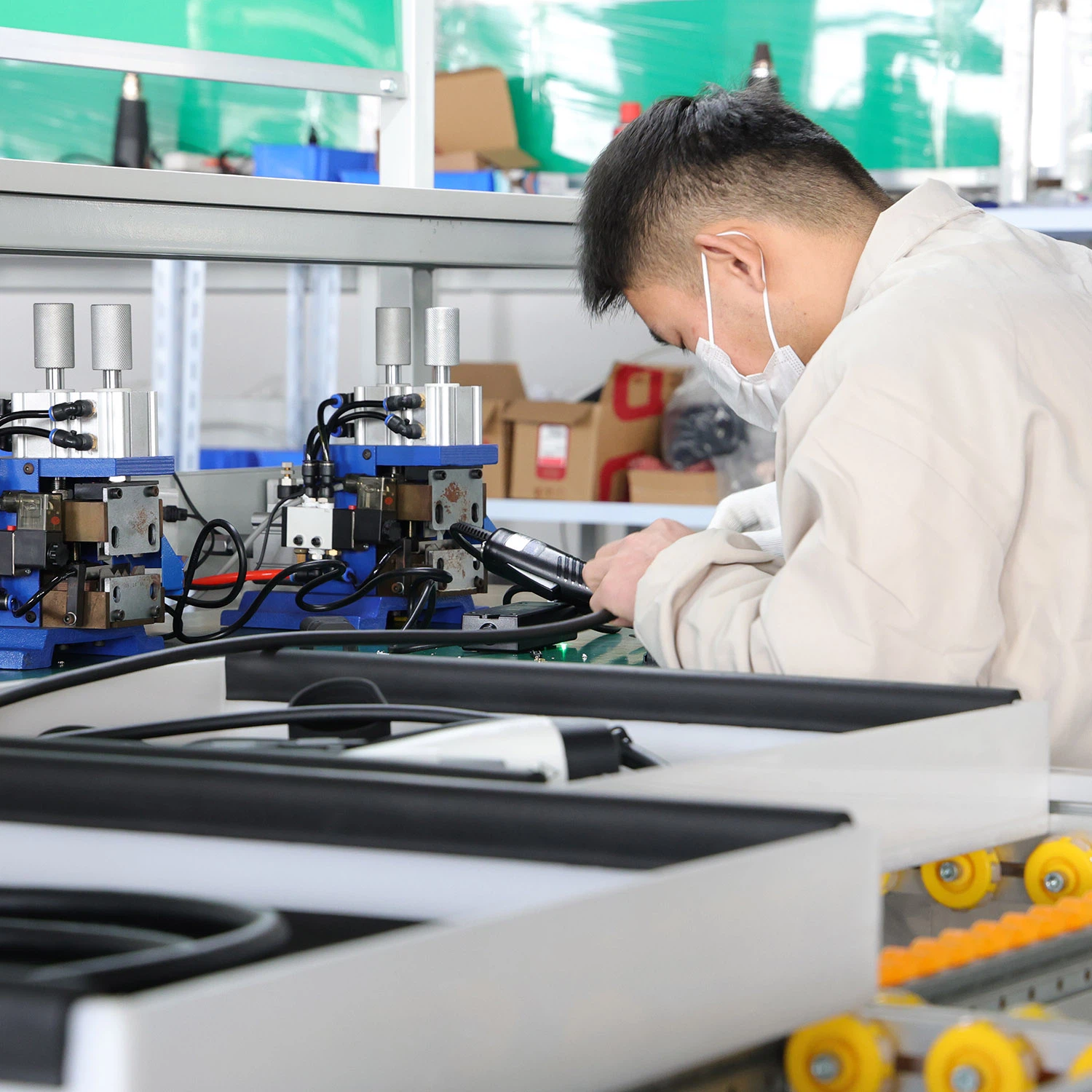
Metal Fabrication:
Conductive elements such as pins, sockets, and locking mechanisms are fabricated using CNC machining, die casting, or stamping methods. These processes ensure precise dimensions and optimal electrical conductivity.
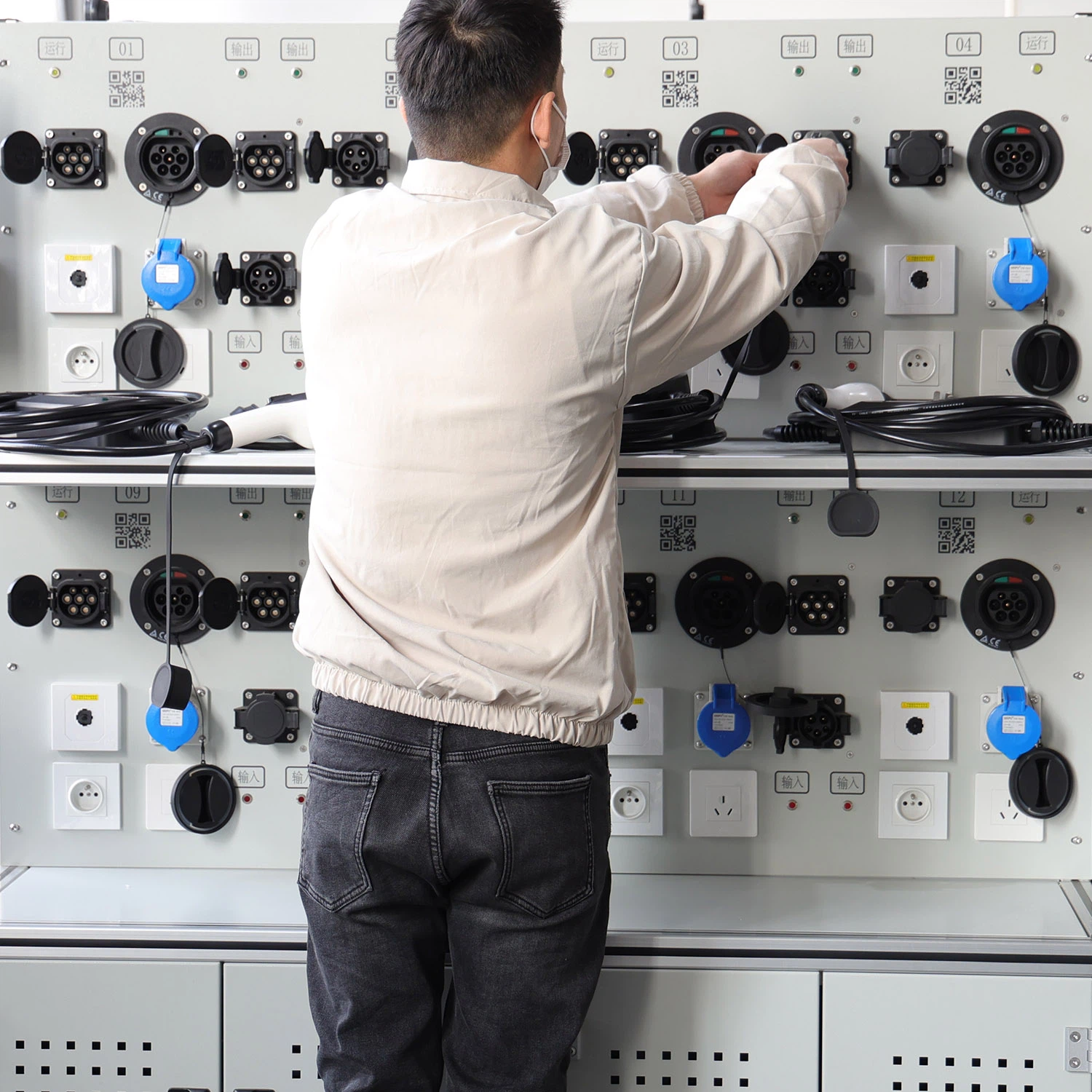
Quality Control:
Throughout the production process, stringent quality control measures are implemented. This includes visual inspections, electrical testing to verify conductivity and insulation resistance, mechanical stress testing to assess durability, and environmental testing to evaluate performance under varying conditions (e.g., temperature, humidity).

Packaging and Distribution:
Once quality checks are completed and the charging connectors meet all specifications, they are carefully packaged to prevent damage during transportation. Products are then distributed to EV charging station manufacturers, automotive OEMs, and other customers worldwide
5. The industry development faces challenges, and opportunities and difficulties are intertwined
Although the electric vehicle charging connector market has broad prospects, it also faces some challenges. First, the lack of uniformity in charging standards is still one of the important factors restricting the development of the industry. The compatibility issues between different standards have led to increased construction costs for charging facilities, inconvenience for users, and also affected the scale effect of the market. Secondly, with the continuous increase in charging power, problems such as heat dissipation and electromagnetic compatibility of Mode 2 EV Charger also need to be solved urgently. When charging at high power, the connector is prone to overheating, affecting its performance and life, and may also interfere with surrounding electronic equipment. In addition, the high cost of charging connectors has also limited the promotion and application of the market to a certain extent.
However, challenges coexist with opportunities. With the continued growth of the electric vehicle market and the increasing requirements of consumers for charging convenience and speed, the demand for charging connectors will further expand. At the same time, the continuous advancement of technology also provides companies with room for innovation and development. For example, the development of wireless charging technology may bring new growth points to the charging connector market; the application of intelligent charging management systems can improve charging efficiency and management level, and provide users with a more convenient charging experience.
6. Policy support is strengthened to help the market develop steadily
In order to promote the development of the electric vehicle industry, governments of various countries have introduced a series of supporting policies, which also provides strong policy guarantees for the charging connector market.
In China, the government has introduced a number of policies to encourage the construction of infrastructure such as charging piles, including subsidies for charging pile construction and the formulation of relevant standards. For example, the "New Energy Vehicle Industry Development Plan (2021-2035)" proposes to accelerate the construction of charging and swapping infrastructure, strengthen charging and swapping technology innovation and standard development, and improve the convenience of charging and swapping services. In Europe, some countries have also guided companies to increase their investment in charging infrastructure through policies. For example, the EU plans to build at least 3 million public charging piles by 2030 to meet the charging needs of electric vehicles. The implementation of these policies will help accelerate the development of the charging connector market and improve the overall level of the market.
The electric vehicle charging connector market is in a period of rapid development and change. Factors such as technological innovation, standard disputes, corporate competition and cooperation, and policy support will have an important impact on the future development of the market. In the future, with the continuous advancement of technology and the continuous maturity of the market, charging connectors are expected to make greater breakthroughs in improving charging efficiency, safety and convenience, providing stronger support for the popularization and development of electric vehicles.