


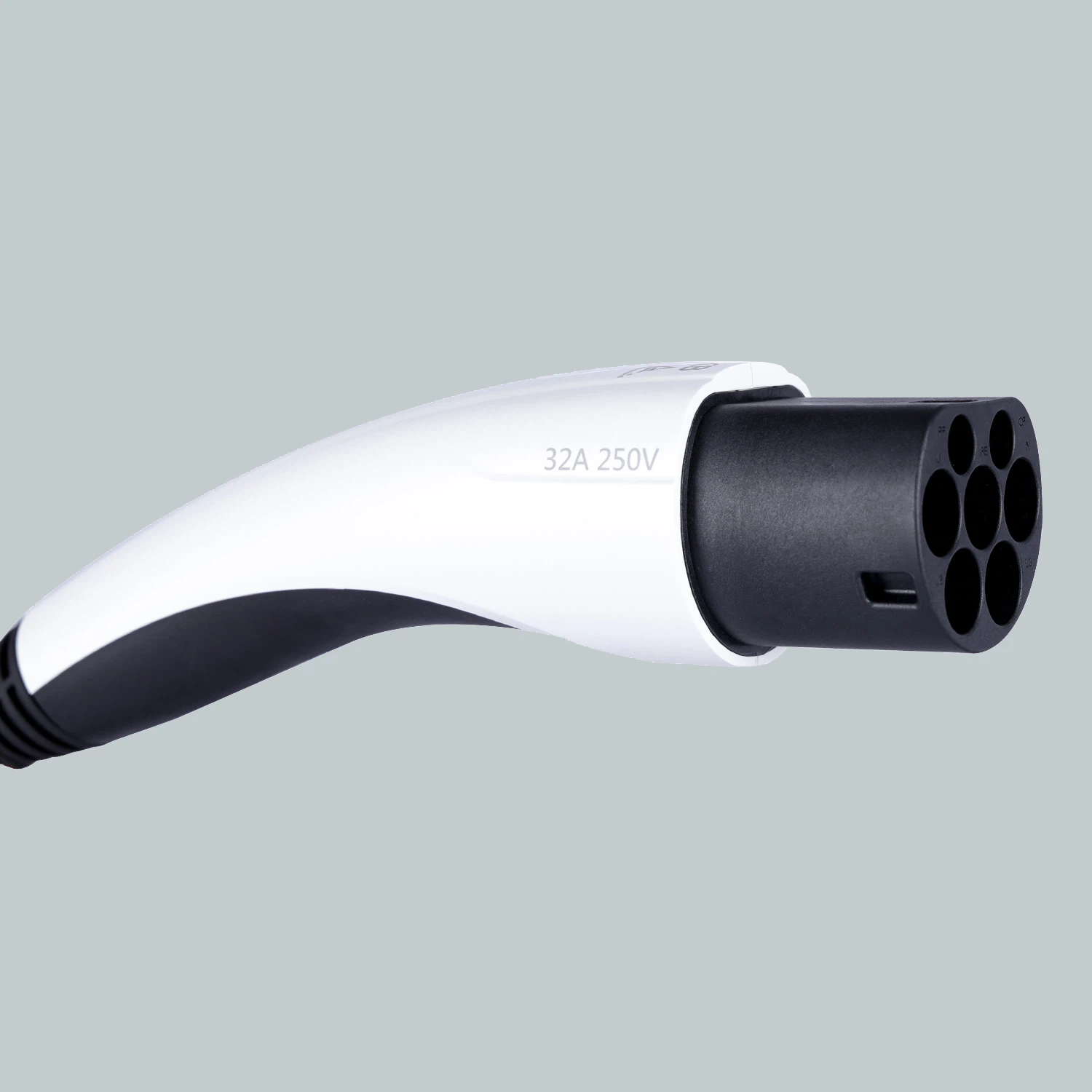
Product Introduction
Complies with National Inspection Standards, Quality Guaranteed
The charging cable uses pure copper materials that meet national inspection standards, ensuring it has undergone strict quality testing for safer use.
Thoughtful Design for Peace of Mind
Ergonomically designed for easy and safe use, making the plug-and-play experience smooth and user-friendly, offering extra reassurance during charging.
Extended Charging Distance, Effortless Long-Distance Charging
The extended design solves the problem of short cables from charging stations, making long-distance charging more convenient and flexible.
Waterproof and Dustproof, Suitable for Various Environments
With an IP54 waterproof and dustproof rating, the charging gun effectively prevents water and dust from entering, ensuring safe and stable charging even in harsh weather conditions.
Advantages
-
IP54 Waterproof Rating for Reliability
The IP54 waterproof rating ensures protection against rain and splashing water, without causing any harmful effects to the charging process, making it safe for use in wet environments.
Stable and Safe Charging
This charging cable features excellent waterproof and flame-retardant capabilities, preventing overheating and potential fire hazards, providing a more stable and safe charging experience for long-term use.
National Standard Pure Copper Cable for Stable Current Transmission
The charging gun contains oxygen-free pure copper wire, which ensures exceptional conductivity, reducing heat generation during charging and ensuring stable current transmission for efficient and safe charging.
Excellent Flame Retardant and Waterproof Performance
Made from high-quality materials, the cable offers superior flame retardancy and waterproofing, staying safe even in high-temperature environments and working reliably in wet weather, catering to various charging scenarios.
Precautions for Using the National Standard Pure Copper Cable Charging Gun:
Check Equipment Condition
Before each use, carefully inspect the charging gun and cable for any signs of damage, aging, or visible wear. If any issues are found, do not use the equipment and contact a professional for repair.
Avoid Excessive Pulling
During use, avoid excessive pulling or bending of the charging cable to prevent internal wire damage, which can affect conductivity and cause unstable charging or safety hazards.
Keep Charging Ports Dry
Ensure the charging port is dry and free of moisture. Before connecting the charging gun to the vehicle, check that both the gun head and the vehicle's charging port are free of water or humidity to avoid short circuits or equipment damage.
Avoid Exposure to Extreme Conditions
Although the charging gun is waterproof and dustproof, it is still recommended to avoid long-term exposure to extreme conditions such as high temperatures, direct sunlight, or freezing cold to extend the product's lifespan.
Handle with Care When Plugging and Unplugging
When plugging in or unplugging the charging gun, handle it gently to avoid forceful insertion or removal, ensuring a secure connection between the gun head and the charging port.
Proper Connection
Make sure the charging gun head is fully compatible with the vehicle's charging port. Insert it correctly and ensure a stable connection before starting the charging process.
Do Not Touch Metal Parts During Charging
Avoid touching the metal parts of the charging gun head during charging to prevent the risk of electric shock. Additionally, do not expose the charging gun to water or allow it to come into contact with liquids.
Waterproof Protection
Even though it has an IP54 waterproof and dustproof rating, it is still advisable to avoid fully submerging the charging gun in water to prevent internal damage.
Regular Maintenance and Cleaning
Regularly clean the charging gun head and cable to ensure that there is no accumulation of dust or dirt on the charging connectors or the cable surface. Use a dry cloth to gently wipe it, and avoid using chemical cleaners.
Unplug After Charging
Once charging is complete, promptly unplug the charging gun head from the vehicle to avoid unnecessary power consumption and protect the charging equipment and the vehicle's battery.
Keep Away from Children
Store the charging gun and cable in a location out of reach of children to prevent them from using or playing with it, which could lead to safety accidents.
Do Not Disassemble or Repair Yourself
If the charging gun malfunctions, do not attempt to disassemble or repair it yourself. Contact a professional technician for inspection, repair, or replacement.
FAQ

1.What is a Type 1 to Type 2 charging cable?
A Type 1 to Type 2 charging cable is an adapter cable used to connect electric vehicles (EVs) that have a Type 1 inlet to charging stations equipped with Type 2 outlets. This allows for compatibility between different EV charging standards, primarily used in North America (Type 1) and Europe (Type 2).
2.What is the difference between Type 1 and Type 2 connectors?
Type 1 Connector: Primarily used in North America and Japan, it is a single-phase connector (SAE J1772) that supports slower charging speeds.
Type 2 Connector: Commonly used in Europe, it is a three-phase connector (IEC 62196) that supports both slow and fast charging speeds, making it more versatile for different charging infrastructures.
3.What vehicles can use a Type 1 to Type 2 charging cable?
Vehicles with a Type 1 charging port, commonly found in models like the Nissan Leaf (earlier versions), Mitsubishi Outlander PHEV, and Chevrolet Volt, can use this cable to connect to Type 2 charging stations typically found in Europe.
4.Is this cable compatible with all charging stations?
The Type 1 to Type 2 charging cable is compatible with public and home charging stations that use a Type 2 outlet. It allows Type 1 vehicles to charge at these stations, but users should ensure the station supports the power requirements of their vehicle.
5.What charging speeds can I expect with a Type 1 to Type 2 cable?
The charging speed depends on the capabilities of the vehicle and the charging station. Since Type 1 is a single-phase connector, it typically offers slower charging speeds compared to the three-phase Type 2. However, you can expect speeds between 7kW and 22kW in most cases.
Hot Tags: electric car wire, China electric car wire manufacturers, suppliers, factory, j1772 type 1, type 1 to type 2 ev cable, Moder 2 EV Charger, Wall Box EV Charger, Type 1 To Type 2, type 1 to type 2 charging cable


